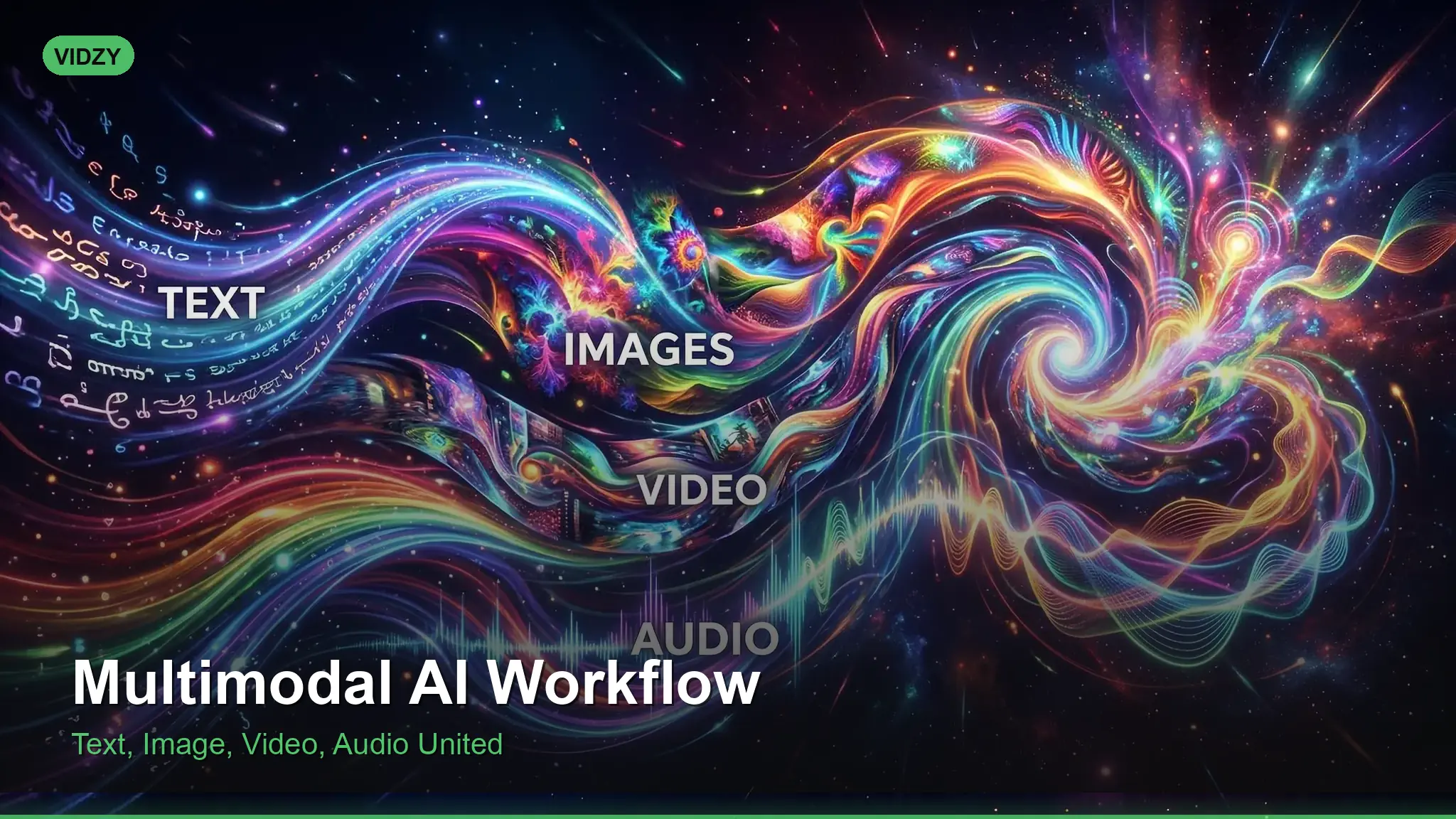
Multimodal AI Workflow: Unifying Text, Image, and Video Generation
The multimodal AI workflow represents the most significant shift in content creation methodology since the transition from analog to digital. Instead of treating text, images, and video as separate production tracks—each with its own tools, teams, and timelines—creators today are building unified workflows where a single creative vision flows seamlessly across all three modalities, with AI handling the translation between them.
This isn’t about using three different AI tools in sequence. It’s about a fundamental integration where text generates images, images generate video, video informs text, and each output feeds into and enriches the others. For marketers, content creators, educators, and filmmakers, mastering the multimodal workflow is becoming the single most valuable production skill of the year.
What Multimodal AI Actually Means in Practice
The term “multimodal” gets thrown around loosely, so let’s define what a genuine multimodal AI workflow looks like in practice.
A traditional content production pipeline is linear and siloed. A copywriter creates text. A designer creates images. A videographer creates video. Each step happens in sequence, often with different people and different tools, and coordination between them is managed through briefs, feedback rounds, and revision cycles.
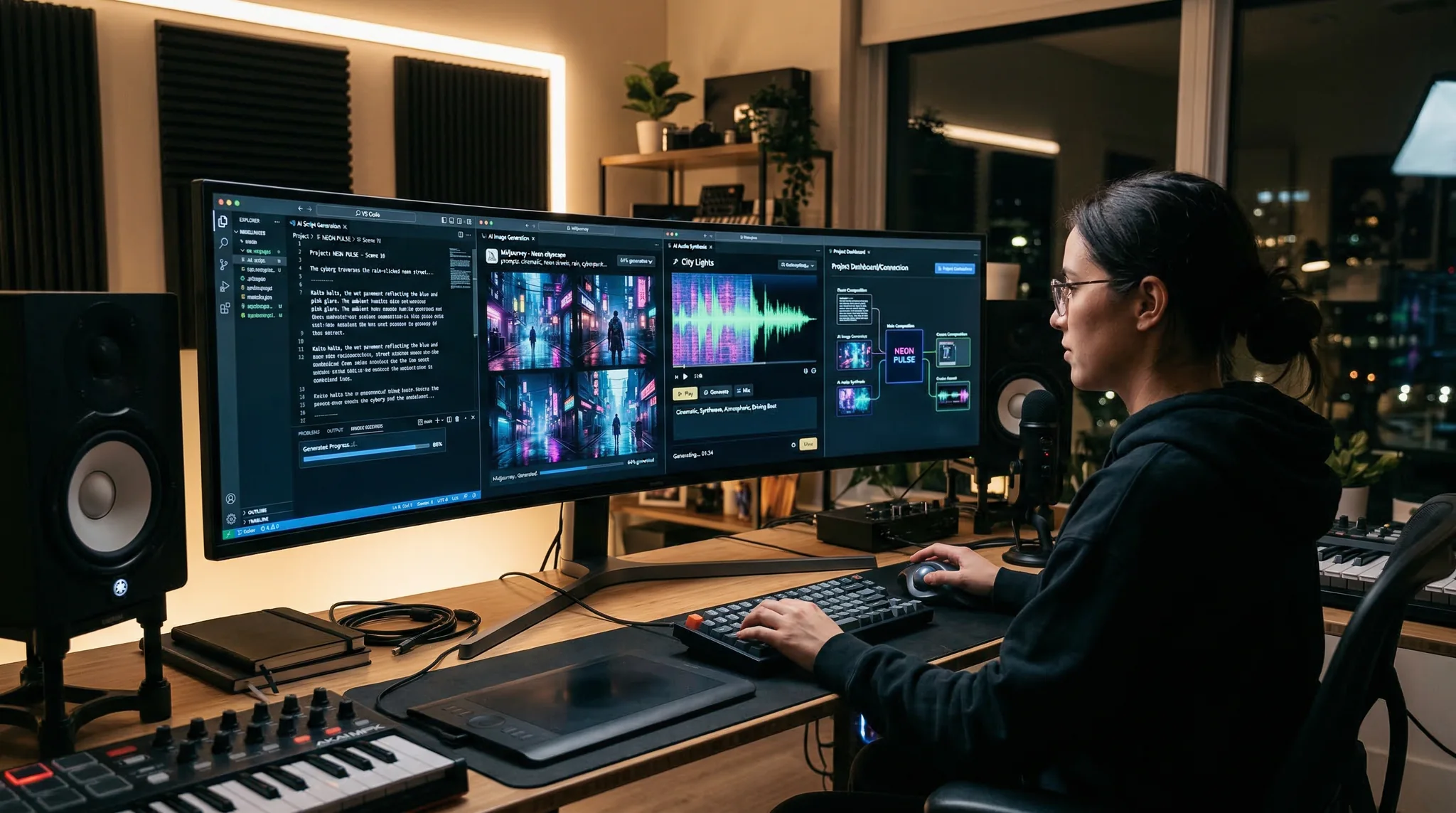
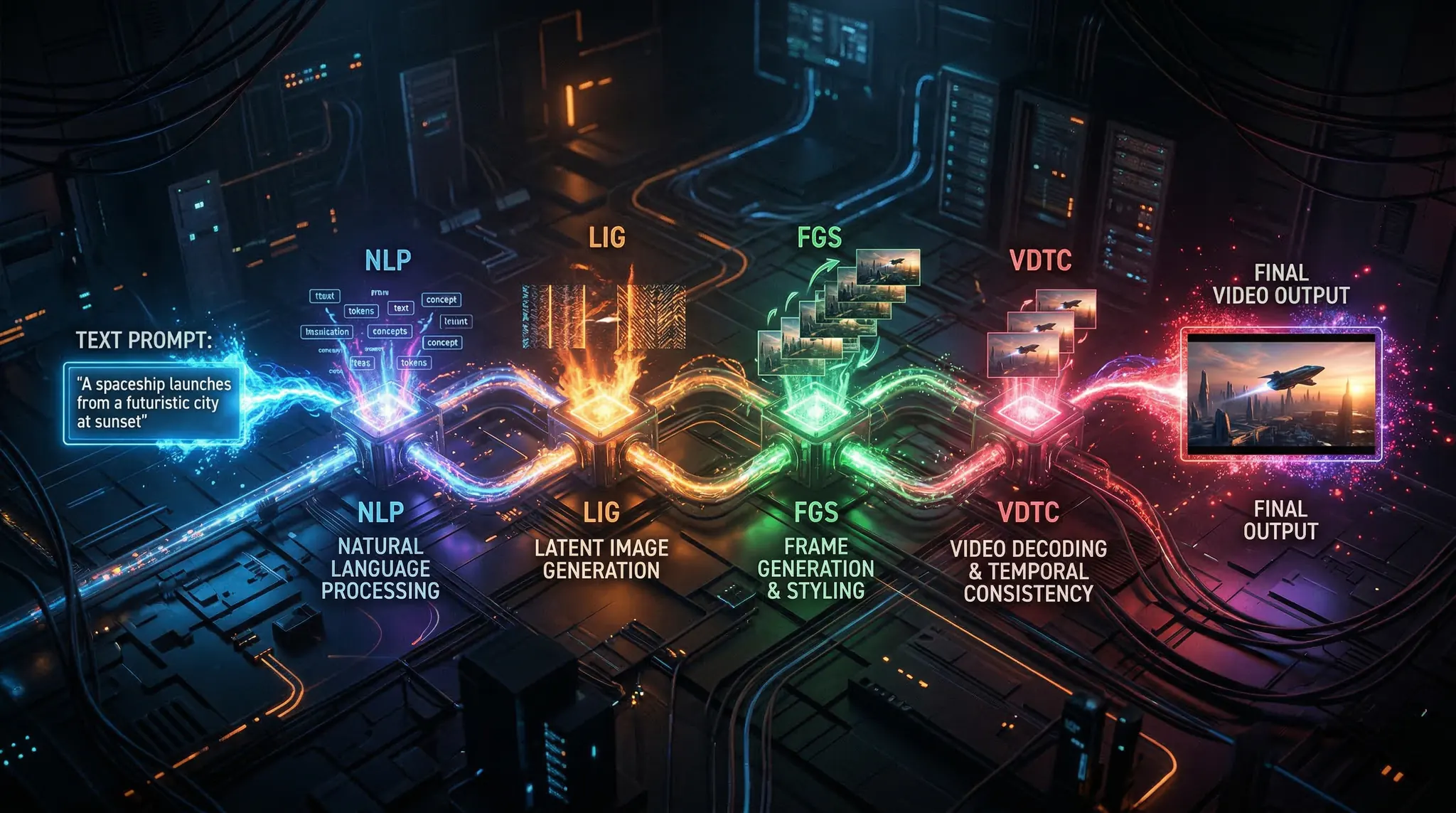
A multimodal AI workflow collapses these silos. A single creator—or a small team—uses interconnected AI tools to generate all content types from a unified creative brief. The workflow is iterative rather than linear: generate an image, use it as a reference for video generation, extract insights from the video to refine the copy, regenerate the image with updated context, and so on.
The key enabling technology is cross-modal understanding—AI models that can process and generate multiple content types and understand the relationships between them. Modern language models understand images. Modern image models understand text. Modern video models understand both text and images. This mutual comprehension enables workflows where each modality informs the others.
The Practical Multimodal Workflow: Step by Step
Here’s how a practical multimodal content creation workflow unfolds using tools available today.
Step 1: Concept Development with Text
Every creative project starts with an idea, and text remains the most natural medium for expressing creative intent. Begin by writing a detailed creative brief that describes your visual concept, target audience, emotional tone, and key messages.
Use an AI language model to expand and refine your brief. Describe the visual style you want, the narrative arc, the key moments, and the emotional progression. The more detailed your text foundation, the more effective every subsequent generation step will be.
Step 2: Visual Exploration with Image Generation
Transform your text concept into visual exploration using AI image generation. Models like Flux can translate your descriptive text into dozens of visual interpretations in minutes.
Generate multiple variations. Experiment with different visual styles, color palettes, compositions, and perspectives. This step isn’t about creating final assets—it’s about discovering the visual language that best serves your concept. Think of it as rapid visual prototyping.
Select your strongest images as reference material for the next step. These images establish the visual identity that will carry through your video content and ensure consistency across all outputs.
Step 3: Motion and Narrative with Video Generation
Use your selected reference images as inputs for image-to-video generation. Platforms like Vidzy support image-to-video workflows where your AI-generated stills become the starting frames for video sequences.
This step adds motion, time, and narrative to your visual concepts. A still image of a product on a table becomes a cinematic reveal with camera movement. A landscape image becomes a sweeping establishing shot. A character portrait becomes an animated scene.
Complement image-to-video generation with text-to-video generation for sequences that need different starting points or camera angles not captured in your reference images.
Step 4: Audio Integration
Add audio layers to your video content. AI audio tools can generate background music matched to your video’s mood, sound effects synchronized with on-screen actions, and even voiceover from text scripts.
The multimodal approach means your audio choices are informed by and consistent with the visual tone established in earlier steps. A warm, golden-lit product video gets warm, inviting background music. A high-energy action sequence gets driving, rhythmic accompaniment.
Step 5: Text Refinement from Visual Output
This step closes the multimodal loop. Review your generated visual and video content and refine your text content—social media captions, blog posts, ad copy, descriptions—based on what the visuals actually communicate. The visuals may reveal emotional tones, narrative angles, or product features that your original text didn’t emphasize.
This bidirectional flow between text and visual content produces more cohesive final output than traditional linear workflows where copy and visuals are developed independently.
Real-World Applications
Marketing Campaigns
A product launch campaign using multimodal AI workflow might proceed like this: Write the campaign narrative and key messages. Generate product images in various settings and styles. Animate the best images into video ads. Generate platform-specific variations (vertical for TikTok and Reels, horizontal for YouTube, square for feed posts). Create synchronized copy for each platform based on what the visuals communicate most effectively.
Total time: one day. Traditional equivalent: three to six weeks with a production team.
Educational Content
An educator creating a lesson on ocean ecosystems: Write the lesson outline and key concepts. Generate images of different marine environments and organisms. Create video sequences showing ecosystem interactions and processes. Generate narration from the lesson script. Combine into a complete video lesson with visuals perfectly matched to the narration.
Brand Identity Development
A startup developing brand visual identity: Write the brand positioning, values, and personality description. Generate dozens of visual interpretations across different styles. Select the visual direction that best embodies the brand. Generate video brand assets (logo animations, product showcases, lifestyle content) consistent with the chosen visual identity. Create a comprehensive brand content library in days rather than months.
Tools Enabling Multimodal Workflows
The multimodal AI workflow relies on tools that either handle multiple modalities natively or integrate seamlessly with complementary tools.
All-in-one platforms like Vidzy offer both image and video generation in a single interface, enabling the image-to-video pipeline without switching tools or exporting between platforms. This integration reduces friction and maintains creative momentum.
API-based workflows allow technical creators to build custom multimodal pipelines using Sora, Flux, and other models through programmatic access. This approach offers maximum flexibility but requires development skills.
Hybrid approaches combine platform tools for generation with traditional editing software for final assembly and polish. This is the most common professional workflow today, balancing AI’s generation speed with the precise editorial control of tools like Premiere Pro or Final Cut.
Prompt Consistency Across Modalities
One of the most important technical skills in multimodal AI workflow is maintaining prompt consistency across different generation tools. Each AI model interprets prompts slightly differently, so achieving visual coherence requires deliberate prompt management.
Create a style reference document. Document the key visual elements—color palette, lighting style, camera characteristics, mood descriptors—that define your project. Reference this document when writing prompts for any modality.
Use consistent terminology. If you describe lighting as “warm, golden hour, soft shadows” in your image prompts, use the same phrasing in your video prompts. Models respond to specific word patterns, and consistency in language produces consistency in output.
Leverage reference images. When moving from image to video generation, always provide the reference images. Visual references communicate style information more reliably than text descriptions alone.
Iterate across modalities simultaneously. If you adjust the visual style in your image generation, carry those adjustments through to video generation immediately. Working in tight multimodal loops prevents style drift that can occur when modalities are developed sequentially over longer periods.
The Competitive Advantage of Multimodal Fluency
Creators who master the multimodal AI workflow gain a compound advantage over those working in single modalities.
Speed: A unified workflow eliminates the handoff delays between text, image, and video production stages. What takes a traditional team weeks can be accomplished in days or hours.
Consistency: Because a single creative vision drives all modalities, the resulting content has a coherence that multi-team, multi-tool production often lacks.
Volume: The efficiency of multimodal workflows enables content production at scales that would be impractical with traditional methods. More content means more testing, more optimization, and more audience touchpoints.
Adaptability: When all modalities are AI-generated, adapting content for different platforms, audiences, or contexts is fast and inexpensive. The same creative concept can be expressed as a blog post, an Instagram carousel, a TikTok video, and a YouTube pre-roll ad with minimal additional effort.
Frequently Asked Questions
Do I need separate tools for each modality in a multimodal workflow?
Not necessarily. Platforms like Vidzy offer both image and video generation in a single interface. However, many creators use specialized tools for each modality and connect them through a consistent creative process. The key is maintaining visual and narrative consistency across tools, not using a single tool for everything.
What’s the most important skill for multimodal AI content creation?
Prompt consistency across modalities is the most critical technical skill. The most important creative skill is having a clear, detailed vision for the final output before beginning any generation. The clearer your creative intent, the more coherent your multimodal output will be.
How long does a multimodal content creation workflow take?
A complete multimodal workflow—from concept through text, image, and video generation to final assembly—typically takes 2 to 8 hours for a single content piece, compared to days or weeks using traditional production methods. With practice, creators develop efficiency that compresses this further.
Can multimodal workflows produce content at traditional production quality?
For most content types and use cases, yes. The combination of AI-generated images, videos, and text—assembled with editorial judgment—produces results that are competitive with mid-to-high-tier traditional production, especially for digital content distribution.
Master the Multimodal Workflow
The future of content creation is multimodal, and the tools to build that future are available right now. Download Vidzy and start building integrated text-to-image-to-video workflows that transform your creative efficiency and output quality.
James Okafor is a tech journalist covering the AI generation space. With bylines in TechCrunch and The Verge, he brings an analytical lens to AI model reviews, industry trends, and the evolving landscape of creative AI tools.
AI Democratizing Content: Breaking Down the Barriers to Professional Creation AI democratizing content creation is the defining story of the creative economy today. For the first time in history, professional-quality video, images, and multimedia content can be produced by anyone with a smartphone and a creative idea. The equipment, expertise, and capital that once gatekept […]
Lo-Fi Realism AI: Why Imperfect Aesthetics Are Dominating Social Feeds Lo-fi realism AI is the aesthetic trend that nobody predicted but everybody recognizes. In a year when AI image generation can produce technically flawless, hyper-polished photorealistic imagery, the most engaging and viral AI art deliberately embraces imperfection. Film grain, soft focus, light leaks, muted color […]
Image-to-Video AI: How Still Photos Are Coming to Life The ability to take a still photograph and transform it into a moving video seemed like science fiction just three years ago. In, image to video AI has become one of the most transformative and practical applications of generative AI. Upload a product photo and watch […]
James Okafor
11 min read
Your Next Video Is 30 Seconds Away
Download Vidzy free, pick a template, and create your first video right now.