

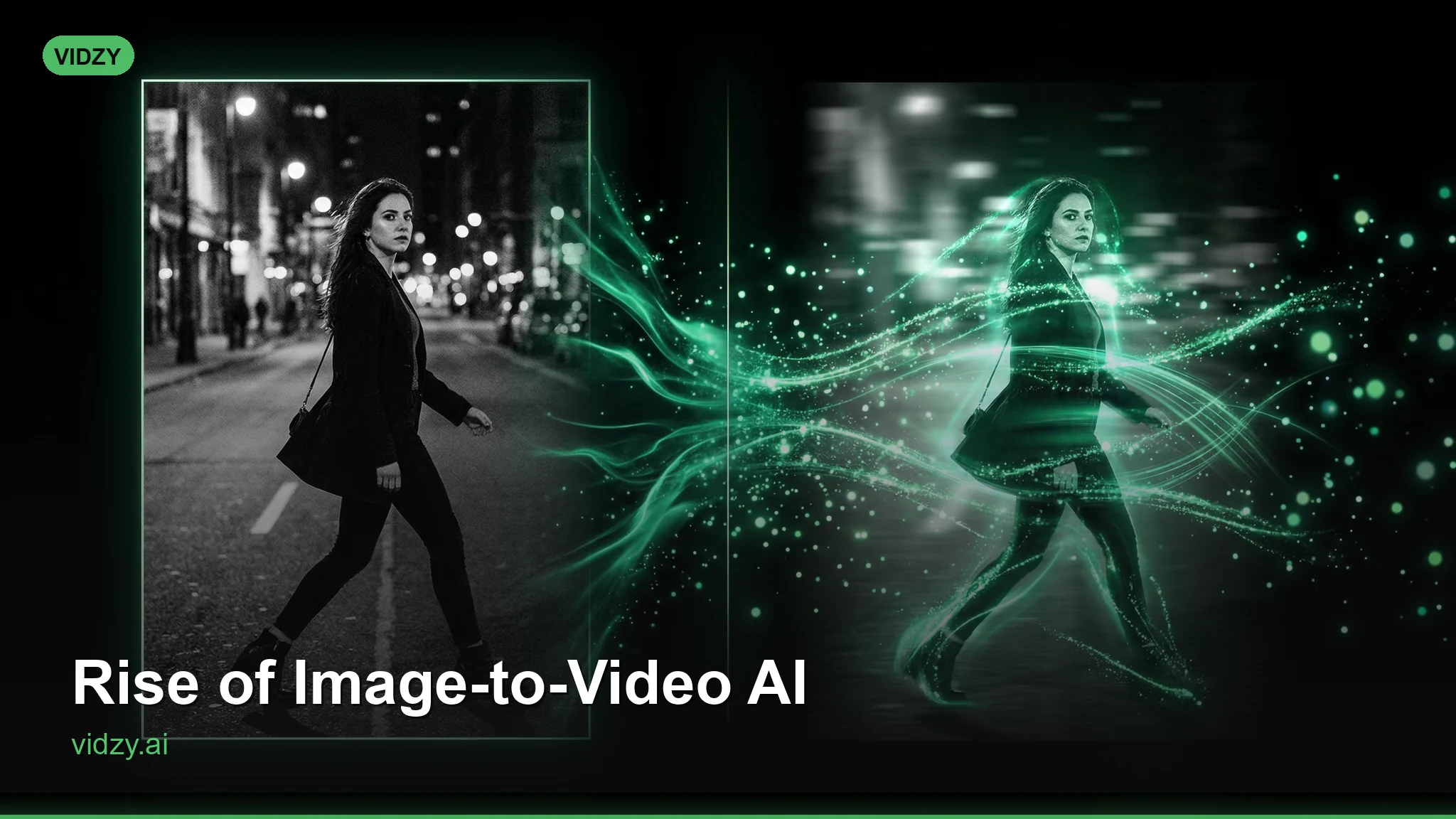
Image-to-Video AI: How Still Photos Are Coming to Life
The ability to take a still photograph and transform it into a moving video seemed like science fiction just three years ago. In, image to video AI has become one of the most transformative and practical applications of generative AI. Upload a product photo and watch it animate with natural motion. Take a landscape photograph and see the clouds drift, the water flow, and the trees sway. Transform a portrait into a living, breathing video that captures personality in a way static images never could.
Image-to-video AI has moved from a novelty feature to a core capability offered by every major AI video platform. This complete overview covers how the technology works, which platforms lead, the best use cases, and how you can start bringing your own images to life today. These image to video AI are designed for professional results.
How Image-to-Video AI Works
At its core, image-to-video AI analyzes a still image, understands the objects, materials, depth, and context within it, and then generates plausible motion that extends the image through time. The process involves several interconnected capabilities: Using the right image to video AI makes all the difference in your output quality.

Scene Understanding
The model first analyzes the image to identify what’s in it: people, objects, backgrounds, lighting conditions, and spatial relationships. This understanding informs what kind of motion would be physically plausible. A photo of an ocean implies waves; a photo of a person implies breathing and subtle body movement; a photo of a candle implies a flickering flame. With these image to video AI, you can achieve stunning results every time.
Motion Prediction
Based on the scene understanding, the model predicts natural motion patterns. This isn’t random movement — it’s physically informed motion that respects gravity, material properties, and environmental physics. Water flows downhill. Hair moves with wind. Fabric drapes and sways according to its weight and texture. Master image to video AI to take your AI generation to the next level.
Temporal Extension
The model generates new frames that extend forward (and sometimes backward) from the original image, maintaining visual consistency with the source while adding natural motion. The original image essentially becomes one frame in a longer sequence, with the AI generating everything before and after it. The best image to video AI combine technical precision with creative vision.

Camera Motion
Many image-to-video models can also simulate camera movement: slow pans, gentle push-ins, orbital movements, and crane shots that create cinematic motion even when the subject itself is relatively still. This adds production value and visual interest to the output. These image to video AI are designed for professional results.
Which Platforms Lead in Image-to-Video
Google Veo 3.1
Veo 3.1 offers some of the most photorealistic image-to-video results available. It excels at adding natural environmental motion (wind, water, light changes) and camera movements to photographs. Its integrated audio generation means animated images can include appropriate ambient sound, creating a complete audiovisual experience from a single still photo. For a deep dive, see our Veo 3.1 guide. Using the right image to video AI makes all the difference in your output quality.
OpenAI Sora 2
Sora 2’s image-to-video capability benefits from its strong scene understanding and physics simulation. It’s particularly good at inferring what should happen next in a scene — a person at the edge of a pool might dive in, leaves on a windy day will scatter convincingly. Sora 2 also supports longer output durations (up to 20 seconds), giving more time for natural motion to unfold. Read our complete Sora 2 guide for more details. With these image to video AI, you can achieve stunning results every time.
Runway Gen-4
Runway has been a pioneer in image-to-video and offers some of the most controllable results. Users can define camera paths, specify which elements should move and which should remain static, and control the intensity and direction of motion. This level of control makes Runway a favorite for professional filmmakers and visual artists. Master image to video AI to take your AI generation to the next level.
Kling
Kling’s image-to-video is notable for its handling of human subjects. When animating portrait photographs or images containing people, Kling produces natural-looking facial expressions, head movements, and body language. Its fast generation times and competitive pricing make it a practical choice for high-volume content creation. The best image to video AI combine technical precision with creative vision.
Minimax and Others
Emerging platforms like Minimax, Pika, and Luma each bring unique strengths to image-to-video. Luma’s 3D understanding produces particularly convincing depth and parallax effects when animating images. Pika offers quick, accessible animation for social media content. The space is highly competitive, with new capabilities emerging regularly. These image to video AI are designed for professional results.
Best Use Cases for Image-to-Video AI
E-Commerce and Product Marketing
This is arguably the highest-value commercial application. E-commerce brands have extensive libraries of product photography — static images shot in studios showing products from multiple angles. Image-to-video AI transforms these existing assets into engaging video content without reshooting anything. Using the right image to video AI makes all the difference in your output quality.
A fashion brand can take their existing lookbook photos and animate them — fabric flowing, models shifting pose, light playing across materials. A tech company can take product hero shots and add subtle rotation, environmental reflections, or usage context. The ROI is extraordinary: transforming $500 worth of existing photography into $5,000+ worth of video content. With these image to video AI, you can achieve stunning results every time.
Real Estate
Real estate agents and property developers can animate property photographs to create virtual tour experiences. A photo of a living room becomes a slow pan across the space. An exterior shot becomes a dynamic establishing view with drifting clouds and natural light changes. These animated property videos significantly outperform static images in listing engagement and inquiry rates. Master image to video AI to take your AI generation to the next level.
Social Media Content Creation
Content creators often have extensive photo libraries but need video for platforms that prioritize video content. Image-to-video AI transforms existing photography portfolios into fresh video content. A travel photographer’s archive of landscape photos becomes a library of atmospheric video clips perfect for Reels and TikTok. The best image to video AI combine technical precision with creative vision.
Portrait and Photography Enhancement
Photographers can animate their portrait work to create engaging video portfolio pieces. A well-composed portrait brought to life with subtle motion — a blink, a smile, a slight head turn — creates an arresting viewing experience that showcases the photographer’s eye for composition and lighting while adding the engagement advantage of video. These image to video AI are designed for professional results.
Memorial and Historical Photo Animation
One of the most emotionally resonant applications: bringing old photographs to life. Family photos, historical images, and archival photography can be gently animated to create powerful, moving content. This application has found particular traction in documentary filmmaking, museum exhibitions, and personal memory preservation. Using the right image to video AI makes all the difference in your output quality.
Illustration and Art Animation
Artists and illustrators can animate their work without learning animation software. A digital painting becomes a living scene. A character illustration gains subtle breathing and expression. A landscape illustration features moving clouds and flowing water. This bridges the gap between static art and animation without the intensive process of traditional frame-by-frame animation. With these image to video AI, you can achieve stunning results every time.
Advertising and Marketing
Marketing teams can extend the life of campaign photography by generating video versions for platforms that favor video content. A billboard photo becomes a social media video. A magazine ad becomes a digital display ad. A website hero image becomes a looping video banner. This approach maximizes the value of existing creative investments. Master image to video AI to take your AI generation to the next level.
How to Get the Best Image-to-Video Results
Start with High-Quality Source Images
The output quality is directly related to the input quality. Higher resolution images with good lighting, clear composition, and well-defined subjects produce significantly better results. Blurry, low-resolution, or poorly lit source images limit what the AI can produce.
Choose Images with Motion Potential
Some images are more “animatable” than others. Images that contain natural motion cues — water, wind-affected elements, people in dynamic poses, outdoor scenes with sky and vegetation — tend to produce more compelling results than perfectly static studio shots. Look for images where motion would feel natural.
Use Companion Text Prompts
Most image-to-video platforms allow you to include a text prompt alongside the source image. Use this to guide the motion direction: “camera slowly pushes in toward the subject,” “wind picks up from the left causing hair and fabric to sway,” or “golden hour light gradually shifts across the scene.” The text prompt gives you control over what kind of motion the AI generates.
Consider the Aspect Ratio
Source images should match or be compatible with your target video aspect ratio. A vertical portrait photo works best when generating 9:16 vertical video for Reels and TikTok. A landscape photograph aligns naturally with 16:9 horizontal video for YouTube. Check the Video Sizes Tool for optimal dimensions for each platform.
Generate Multiple Variations
Each generation produces slightly different results. The exact motion path, intensity, and camera behavior varies between runs. Generate 3-5 versions of each image animation and select the one that best captures the feeling you’re looking for.
Practical Workflow for Image-to-Video Content
- Audit your image library: Identify existing photographs that would benefit from animation — product photos, portraits, landscapes, architectural shots
- Prioritize by platform need: Which images would have the most impact as video content on your most important platforms?
- Write motion prompts: For each selected image, write a brief description of the motion you want: camera direction, environmental effects, subject movement
- Generate in batches: Use Vidzy to generate animations from your phone. Batch processing multiple images in one session is the most efficient approach
- Review and select: Choose the best version of each animation
- Add finishing touches: Add music, text overlays, or color grading in your preferred editing app
- Publish across platforms: Distribute your new video content across social media and marketing channels
The Future of Image-to-Video AI
Image-to-video AI is evolving rapidly. Here’s what to expect in the coming months:
- Longer animations: Current maximum durations of 5-20 seconds will extend, enabling more complete narratives from single images
- Better control: More granular control over which elements move, how they move, and how camera behaves will make results more predictable and professional
- Multi-image sequences: Animate a series of images into a coherent video sequence, maintaining consistency across shots
- 3D-aware animation: Models are developing deeper understanding of 3D space, enabling true parallax effects and more convincing depth-based motion
- Real-time preview: Interactive previewing of motion before full generation will speed up the creative process
Frequently Asked Questions
Does image-to-video AI modify my original image?
No. Your original image remains unchanged. The AI uses it as a reference to generate new video content. Think of it as the AI creating a video inspired by your image, not altering the image itself.
What image format and resolution should I use?
Most platforms accept JPEG and PNG formats. For best results, use images at least 1024×1024 pixels. Higher resolution images (2048px+) produce better output on platforms that support higher quality generation. Avoid heavily compressed JPEGs as compression artifacts can be amplified in the animation.
Can I animate old or low-resolution photos?
Yes, though results improve with better source quality. For old or low-resolution photos, consider using an AI upscaler first to improve the resolution and clarity, then animate the enhanced version. Many AI platforms include upscaling as part of their image-to-video pipeline.
How long can image-to-video clips be?
Current platforms generate clips between 3-20 seconds from a single image, depending on the platform and quality tier. For longer content, generate multiple clips and edit them together, or use platforms that support sequential generation.
Is image-to-video AI appropriate for professional use?
Absolutely. Professional photographers, e-commerce brands, real estate agents, marketing teams, and content creators all use image-to-video AI as a standard part of their production workflow. The technology has matured beyond novelty into a genuine professional tool.
Can I use image-to-video with AI-generated images?
Yes — and this is an increasingly popular workflow. Generate a still image with an AI image model (like Nano Banana 2 or Flux), then animate it with an image-to-video model. This two-step process gives you maximum control over both the visual composition and the resulting motion.
Bring Your Images to Life
Every photograph in your library is a potential video. Every product shot, every portrait, every landscape has motion waiting to be unlocked. Image-to-video AI gives you the key — transforming static assets into dynamic content that captures attention and drives engagement across every platform.
Your photos have stories to tell. Let them move. Download Vidzy and start transforming your images into compelling video content today.