AI Video Production Cost vs Traditional: The Numbers Don’t Lie
AI video production cost has become the most compelling argument for adopting generative AI in content creation workflows. What once required five-figure budgets, multi-day shoots, and teams of specialists can now be accomplished by a single creator with a smartphone app in minutes. But how dramatic is the cost difference, really? And does lower cost inevitably mean lower quality?
This analysis puts real numbers next to both approaches across common video production scenarios. Whether you’re a marketing director evaluating budget allocation, a small business owner weighing options, or a freelance creator building your toolkit, these comparisons will help you make informed decisions about where AI video generation makes financial sense—and where traditional production still justifies the investment.
Understanding Traditional Video Production Costs
Traditional video production costs are notoriously variable, but industry benchmarks provide useful reference points. A professional video production project typically breaks down into three phases, each with its own cost structure.
Pre-production includes scriptwriting, storyboarding, location scouting, casting, and scheduling. For a simple marketing video, this phase typically runs $1,500 to $5,000. For complex productions, it can exceed $20,000.
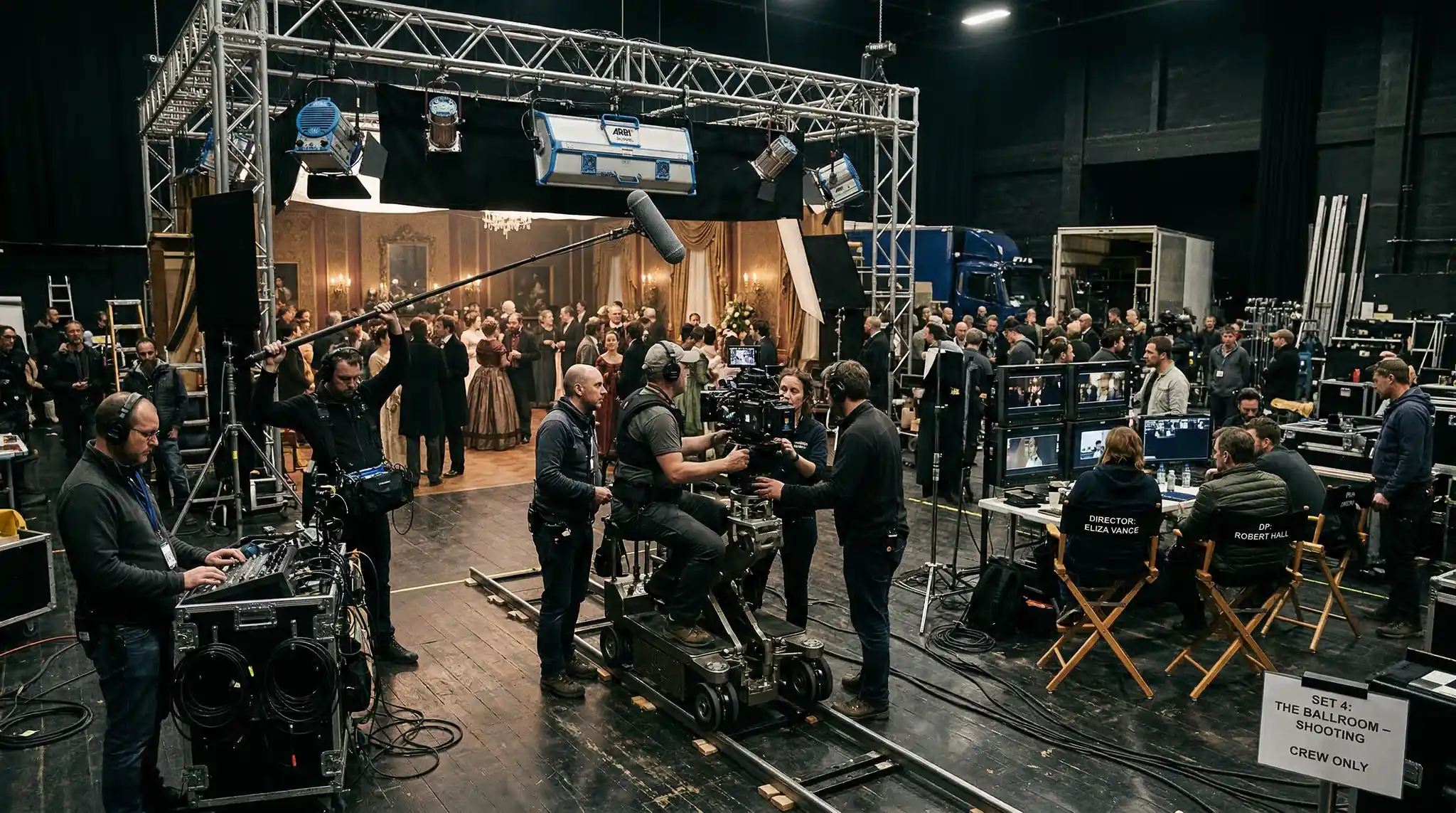
Production covers the actual shoot—camera operators, directors, lighting technicians, sound engineers, talent, location fees, equipment rental, and catering. A single day of professional production with a small crew in a major US market costs $5,000 to $15,000. Multi-day shoots scale linearly or worse.
Post-production encompasses editing, color grading, sound design, motion graphics, and revisions. Professional editing runs $100 to $250 per hour, and a polished marketing video typically requires 20 to 40 hours of post-production work.
AI Video Generation Costs today
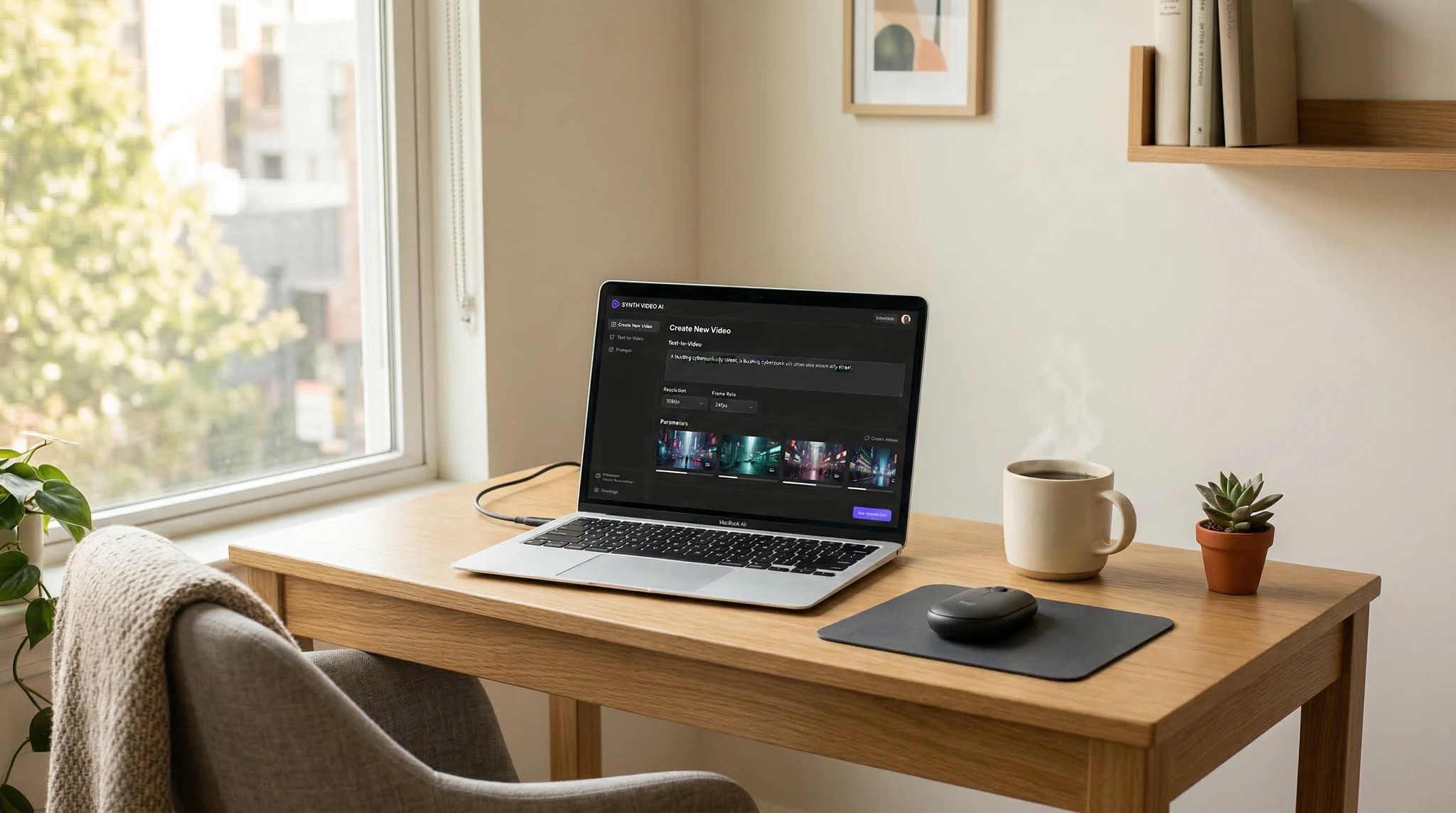
The cost structure for AI video generation is fundamentally different. There’s no crew to hire, no location to book, no equipment to rent, and no post-production pipeline to manage. The primary costs are platform subscriptions or per-generation credits.
Using a platform like Vidzy, the cost per video clip ranges from a few credits to a modest subscription fee—typically under $30 per month for regular use. Even at the highest usage levels, monthly AI video generation costs rarely exceed $100 for individual creators.
For businesses using API access to models like Sora or Veo directly, per-generation costs have dropped to approximately $0.10 to $0.50 per second of generated video, depending on resolution and model selection.
Scenario-by-Scenario Cost Comparison
Scenario 1: 30-Second Social Media Ad
Traditional production: $3,000 to $8,000. This assumes a half-day shoot with a small crew (director, camera operator, lighting tech), one talent, a simple set or location, and 15 to 20 hours of post-production including editing, color grading, and simple motion graphics.
AI generation: $5 to $30. Generate multiple video clips, select the best, and combine them with text overlays and music in a simple editor. Total time: 30 minutes to 2 hours.
Cost savings: 99%+
Quality comparison: For product demonstrations, lifestyle B-roll, and concept-driven ads, AI generation now produces results that are competitive with traditional production. For testimonial-style ads or content requiring specific human performances, traditional production maintains an edge.
Scenario 2: Product Launch Video (60 seconds)
Traditional production: $8,000 to $25,000. Multiple setups, product close-ups requiring macro lenses and controlled lighting, motion graphics for feature callouts, professional voiceover, and licensed music. 3 to 5 days of pre-production, 1 to 2 days of shooting, 30 to 50 hours of post-production.
AI generation: $20 to $100. Generate product showcase clips from multiple angles and environments, add AI-generated or stock music, layer text animations. Total time: 2 to 6 hours.
Cost savings: 95 to 99%
Quality comparison: AI excels at placing products in aspirational environments and generating dynamic camera movements. However, photorealistic close-up product shots with accurate material rendering (metallic finishes, glass reflections, fabric textures) may still benefit from professional photography for hero assets.
Scenario 3: Explainer Video (2 minutes)
Traditional production: $5,000 to $15,000 for live action; $8,000 to $30,000 for custom animation. Live action requires talent, sets, and full production pipeline. Animation requires illustrators, animators, and voice talent, with 4 to 8 weeks of production time.
AI generation: $30 to $150. Generate scene-by-scene clips matching a script, add voiceover (potentially AI-generated), and edit together with transitions and text overlays. Total time: 4 to 12 hours.
Cost savings: 95 to 99%
Scenario 4: Brand Story / Corporate Video (3-5 minutes)
Traditional production: $15,000 to $50,000+. Multiple locations, multiple talent, 2 to 3 day shoots, extensive post-production, professional color grading, custom music or licensing. 4 to 8 weeks from concept to delivery.
AI generation: $100 to $500. Complex multi-scene generation with character consistency, professional editing, voiceover, and music. Total time: 1 to 3 days.
Cost savings: 97 to 99%
Quality comparison: This is where the gap between AI and traditional production is most noticeable. A well-produced corporate video with real employees, genuine locations, and authentic human moments still carries an emotional weight that AI-generated content struggles to match.
Hidden Costs and Considerations
Raw cost comparison tells only part of the story. Several factors affect the true cost-benefit calculation.
Iteration speed. Traditional production makes changes expensive. Reshooting a scene might cost thousands. AI generation makes iteration essentially free—you can regenerate, adjust prompts, and experiment without financial penalty. For creative exploration and A/B testing, this advantage is massive.
Time to market. A traditional video project takes weeks from concept to delivery. AI video generation can compress this to hours. In fast-moving markets—product launches, trending topics, seasonal campaigns—the speed advantage translates directly to revenue opportunity.
Scalability. Need 10 variations of an ad for different audiences? Traditional production would require separate shoots or extensive re-editing. AI generation produces variations at marginal cost, enabling personalization strategies that were previously uneconomical.
Human connection. For testimonials, interviews, company culture videos, and content where authentic human presence is the value proposition, traditional production remains superior. AI quality has improved dramatically, but audiences still respond differently to real humans sharing genuine experiences.
Long-term brand assets. High-end brand films, flagship product launches, and prestige content pieces may justify traditional production costs because they serve as brand anchors used repeatedly over months or years.
The Hybrid Approach: Getting the Best of Both
The smartest content teams today aren’t choosing one approach exclusively—they’re combining both strategically.
Use AI for: Social media content, ad concept testing, B-roll generation, rapid prototyping, internal communications, seasonal variations, and any content where volume and speed matter more than unique human presence.
Use traditional production for: Hero brand content, executive communications, customer testimonials, event coverage, and any content where authenticity and human connection are the primary value drivers.
Use hybrid workflows for: Product launches (AI for teaser content, traditional for hero video), campaigns (AI for volume variations, traditional for hero creative), and training content (AI for scenario illustrations, traditional for instructor-led segments).
The ROI Perspective
Cost savings are meaningful, but return on investment tells the complete story. When AI video generation allows you to produce 50 pieces of content for the same budget that previously funded 2, the total impact of your content program can increase dramatically—even if each individual piece is slightly less polished than a traditional production.
Calculate your potential savings based on your specific content needs and production volume.
Frequently Asked Questions
How much does AI video generation cost compared to hiring a production company?
For most common video types, AI generation costs 95 to 99 percent less than traditional production. A 30-second marketing video that costs $3,000 to $8,000 with a production company can be generated for $5 to $30 using AI tools.
Is the quality difference noticeable?
For many use cases—social media content, product showcases, explainer videos—AI-generated quality is now competitive with mid-tier traditional production. High-end cinematic production and content requiring authentic human performances still favor traditional approaches.
Should I completely replace traditional video production with AI?
Most content strategies benefit from a hybrid approach. Use AI for high-volume, time-sensitive content and traditional production for flagship pieces where human authenticity and production polish are critical.
How do AI video costs scale with volume?
AI video generation costs scale almost linearly and cheaply. Producing 100 videos costs roughly 100 times the cost of producing one video, with no setup costs, crew scaling, or logistical complexity. This makes AI ideal for content strategies that require volume.
Start Saving on Video Production Today
Every day you spend planning, budgeting, and scheduling traditional video production for content that AI could generate in minutes is a day of lost opportunity. Download Vidzy and see how much you could save on your next video project—the results might surprise you.
James Okafor is a tech journalist covering the AI generation space. With bylines in TechCrunch and The Verge, he brings an analytical lens to AI model reviews, industry trends, and the evolving landscape of creative AI tools.
AI Video Trends: Five Shifts That Will Reshape Content Creation Predicting AI video trends requires looking beyond incremental quality improvements and examining the structural shifts that will fundamentally change how video content is conceived, produced, and consumed. The pace of advancement from 2024 through gives us a reliable trajectory, and the research papers, prototype demonstrations, […]
The Complete Veo 3.1 Guide: Google’s Premier AI Video Generator Google’s Veo 3.1 has carved out a distinctive position in the AI video generation landscape. While competitors chase the longest clips or the widest feature sets, Google has focused on two areas where Veo 3.1 genuinely leads: photorealism and integrated audio. The result is an […]
Text Generation AI Images: How Models Solved Their Biggest Embarrassment Text generation AI images was the running joke of the generative AI world for three solid years. From 2022 through most of 2025, even the most powerful image models could produce breathtaking photorealistic scenes, stunning artistic compositions, and convincing human faces—but ask them to write […]
James Okafor
10 min read
Your Next Video Is 30 Seconds Away
Download Vidzy free, pick a template, and create your first video right now.