

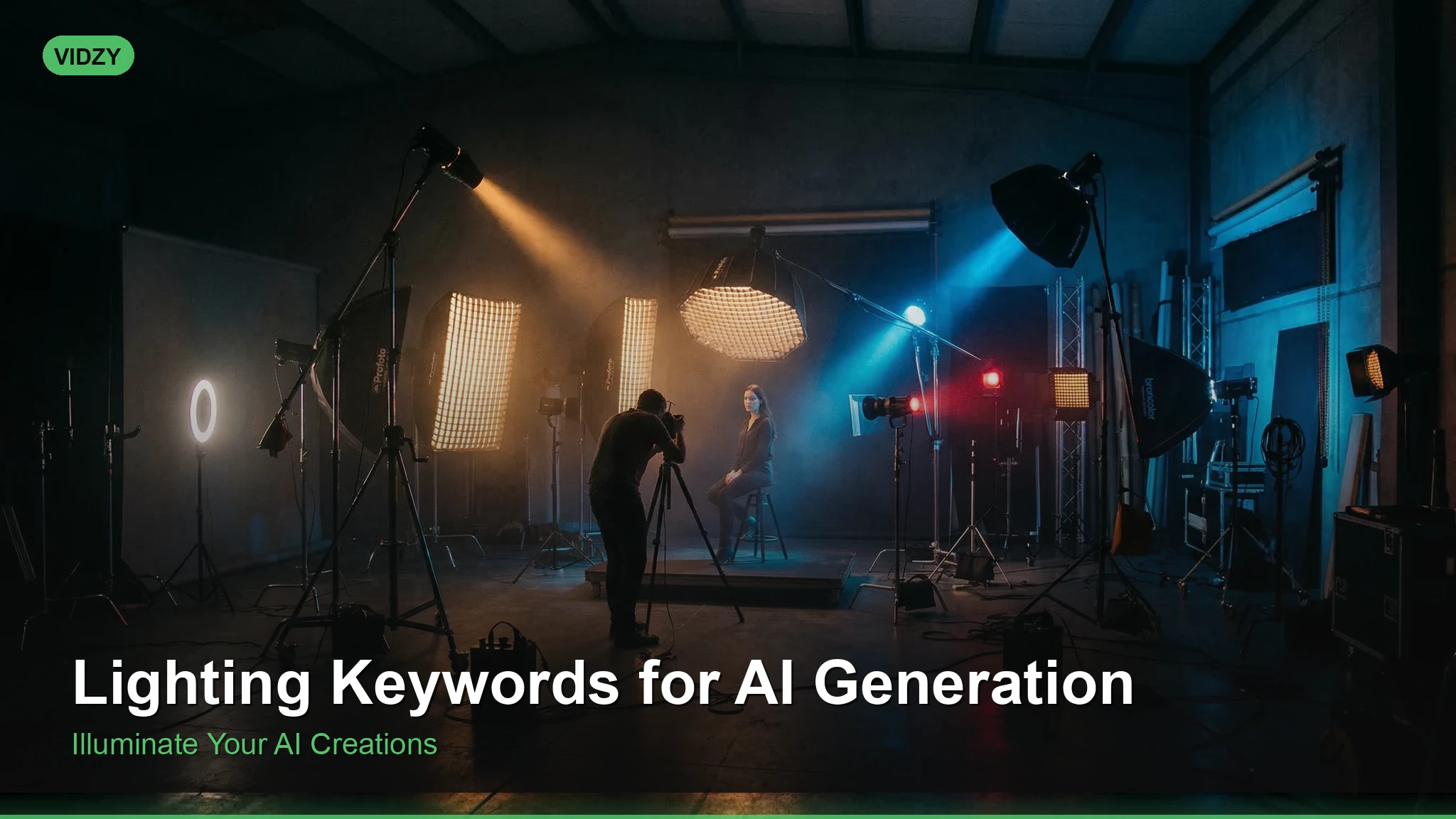
Why Lighting Keywords Transform AI Image Quality
Ask any professional photographer what separates an amateur snapshot from a professional image, and the answer is almost always the same: lighting. The same principle applies to AI image generation. Lighting keywords for AI are among the most powerful and underutilized tools in your prompt engineering arsenal. A single lighting term can shift an image from flat and lifeless to dramatic and gallery-worthy.
AI models like Stable Diffusion, Midjourney, Flux, and DALL·E were trained on millions of photographs that were captioned with lighting terminology. When you use these terms in your prompts, you are speaking the model’s native language. The model has seen thousands of images tagged “golden hour” or “Rembrandt lighting” and has learned exactly what those terms look like visually.
This guide covers every major lighting keyword category, shows you exactly when and how to use each one, and provides ready-to-use example prompts you can adapt for your own projects.
Natural Lighting Keywords
Natural light refers to sunlight and ambient daylight in all its variations. These keywords are essential for outdoor scenes, lifestyle photography, and any image that should feel organic and unposed.
Golden Hour
The period shortly after sunrise or before sunset when the sun is low on the horizon, producing warm, soft, directional light. This is the most popular natural lighting keyword in AI prompts — and for good reason. It flatters every subject.
Prompt: “Portrait of a young couple walking through a lavender field, golden hour light, warm sun flare, long shadows, romantic and dreamy atmosphere, shot on 85mm lens”
Blue Hour
The twilight period before sunrise or after sunset when the sky turns deep blue. Blue hour creates a cool, ethereal, contemplative mood that contrasts beautifully with warm artificial lights in a scene.
Prompt: “Cityscape of Paris during blue hour, Eiffel Tower illuminated, deep blue sky transitioning to purple, city lights reflecting on the Seine, serene and magical atmosphere” These lighting keywords AI are designed for professional results.
Overcast / Cloudy Day
Cloud cover acts as a massive natural diffuser, creating soft, even light with minimal shadows. This is ideal for portraits (no harsh shadows under eyes or nose) and product photography outdoors.
Keywords: overcast light, cloudy day, soft diffused daylight, flat natural light, even illumination
Harsh Midday Sun
Direct overhead sunlight creates strong shadows, high contrast, and intense brightness. While often considered unflattering for portraits, it creates striking geometric shadow patterns and a raw, documentary feel.
Keywords: harsh sunlight, midday sun, strong shadows, high contrast natural light, direct overhead sun
Dappled Light
Sunlight filtered through leaves or lattice structures, creating a pattern of light and shadow. This is incredibly atmospheric and adds organic texture to any scene.
Prompt: “Portrait of a woman reading a book in a garden, dappled sunlight filtering through tree canopy, warm scattered light patches on her face, bokeh, peaceful and contemplative, editorial photography” Using the right lighting keywords AI makes all the difference in your output quality.
Studio Lighting Keywords
Studio lighting refers to controlled, artificial setups used in professional photography. These terms give you precise control over how light sculpts your subject.
Rembrandt Lighting
Named after the painter, this technique creates a small triangle of light on the shadow side of the face. It is the gold standard for dramatic portrait lighting — one main light positioned high and to the side.
Prompt: “Dramatic portrait of a middle-aged man with a beard, Rembrandt lighting, dark moody background, single key light from the left, triangle of light on right cheek, chiaroscuro, photorealistic” With these lighting keywords AI, you can achieve stunning results every time.
Butterfly Lighting (Paramount Lighting)
The light source is positioned directly in front of and above the subject, creating a small butterfly-shaped shadow under the nose. This is classic Hollywood glamour lighting, flattering for most face shapes.
Keywords: butterfly lighting, paramount lighting, glamour lighting, beauty lighting, overhead key light
Split Lighting
Half the face is lit, half is in complete shadow. Creates maximum drama and a strong sense of duality. Often used in moody portraits, character studies, and film noir aesthetics.
Prompt: “Split lighting portrait of a woman, half face illuminated half in deep shadow, dramatic and mysterious, black background, high contrast, fine art photography” Master lighting keywords AI to take your AI generation to the next level.
Three-Point Lighting
The standard professional setup: key light (main), fill light (softens shadows), and back/rim light (separates subject from background). Use this keyword when you want a clean, polished, commercial look.
Keywords: three-point lighting, professional studio lighting, key and fill, commercial lighting setup
Ring Light
A circular light surrounding the lens, creating even, shadow-free illumination with distinctive circular catchlights in the eyes. Popular in beauty and social media content.
Keywords: ring light, circular catchlights, even frontal lighting, beauty ring light, influencer lighting
Dramatic and Artistic Lighting Keywords
These keywords push beyond standard photography into more expressive, cinematic territory.
Rim Lighting / Backlit
Light coming from behind the subject, creating a glowing outline or halo effect. The front of the subject may be in silhouette or subtly lit. This is one of the most visually striking lighting techniques.
Prompt: “Silhouette of a dancer mid-leap, strong rim lighting from behind, glowing outline against a dark background, dramatic and ethereal, long exposure feel, fine art photography” The best lighting keywords AI combine technical precision with creative vision.
Chiaroscuro
The Italian term for strong contrast between light and dark, originating from Renaissance painting. Produces deeply dramatic images with rich shadows and selective illumination.
Keywords: chiaroscuro, dramatic light and shadow, Caravaggio lighting, deep blacks, selective illumination
Volumetric Lighting / God Rays
Visible shafts of light cutting through atmosphere — fog, dust, smoke, or haze. Creates depth, dimension, and a quasi-spiritual quality. Extremely effective in fantasy, sci-fi, and architectural scenes.
Prompt: “Ancient cathedral interior, volumetric god rays streaming through stained glass windows, dust particles visible in light beams, sacred and awe-inspiring atmosphere, wide-angle architectural photography” These lighting keywords AI are designed for professional results.
Neon Lighting
Colored artificial light from neon signs, LED strips, or similar sources. Creates saturated, vibrant color casts. A staple of cyberpunk, nightlife, and urban aesthetics.
Keywords: neon lighting, neon glow, colored neon reflections, neon-lit, cyberpunk neon, RGB lighting
Prompt: “Portrait of a person on a rainy city street at night, neon signs reflecting pink and blue light on wet pavement, cyberpunk aesthetic, cinematic color grading, moody and atmospheric” Using the right lighting keywords AI makes all the difference in your output quality.
Candlelight / Firelight
Warm, flickering, low-intensity light from flames. Creates an intimate, warm, slightly unpredictable quality. The color temperature is very warm (orange/amber).
Keywords: candlelight, firelight, warm flame glow, flickering light, intimate warm illumination, by candlelight
Cinematic Lighting Keywords
These terms specifically reference film and television lighting techniques that AI models understand well.
- Film noir lighting: High contrast, dramatic shadows, venetian blind patterns, low-key
- Anamorphic lens flare: Horizontal streak flares typical of widescreen cinema
- Practical lighting: Light from visible sources within the scene (lamps, screens, windows)
- Motivated lighting: Artificial light that appears to come from a natural source in the scene
- Low-key lighting: Predominantly dark with selective highlights — moody, dramatic
- High-key lighting: Bright, even, minimal shadows — clean, optimistic, commercial
Combining Lighting Keywords for Maximum Impact
The real magic happens when you combine lighting terms with other prompt elements. Here are some powerful combinations:
Lighting + Camera Angle
Low angle + rim lighting = heroic silhouette. High angle + soft overcast = vulnerable intimacy. The interaction between how light hits the subject and where the camera sees it creates compound effects.
For camera angle techniques, check out our guide on camera angles in AI prompts.
Lighting + Color
“Golden hour” already implies warm tones, but you can amplify it: “golden hour light with deep amber and rose tones.” For neon, specify the colors: “neon lighting in teal and magenta.” The more specific you are about the color of light, the more control you have.
Lighting + Mood
Lighting and mood should reinforce each other. “Rembrandt lighting, mysterious and contemplative” works naturally. “Bright ring light, dark and ominous” creates a contradiction the model may struggle to resolve.
Lighting Cheat Sheet by Genre
- Portraits: Rembrandt, butterfly, golden hour, three-point
- Products: Three-point, high-key, soft studio, ring light
- Landscapes: Golden hour, blue hour, overcast, god rays
- Horror: Low-key, split, underlit (light from below), candlelight
- Cyberpunk/Urban: Neon, practical lights, rim lighting, rain reflections
- Fantasy: Volumetric, god rays, bioluminescent, ethereal glow
- Fashion: Butterfly, rim, colored gels, dramatic single-source
- Food: Soft window light, backlit, golden hour, diffused overhead
Common Lighting Mistakes to Avoid
Using Contradictory Lighting Terms
“High-key Rembrandt lighting” is a contradiction — high-key means bright and even, Rembrandt means dramatic and shadowed. The model will try to average them out, producing a muddled result.
Forgetting About Light Color Temperature
Not all light is the same color. Sunlight at noon is neutral-cool. Golden hour is warm. Fluorescent is slightly green. Tungsten is warm orange. Specifying color temperature (“warm tungsten light,” “cool daylight”) adds another layer of control.
Relying on “Dramatic Lighting” Alone
“Dramatic lighting” is vague. The model has to guess what kind of drama you want. Specifying the exact technique — chiaroscuro, split lighting, single spotlight — gives you predictable results.
Frequently Asked Questions
How many lighting keywords should I use in one prompt?
One primary lighting keyword plus one modifier is usually ideal. For example, “Rembrandt lighting with warm amber tones” or “golden hour with soft lens flare.” Adding three or four different lighting techniques to the same prompt will confuse the model since many lighting setups are physically incompatible.
Do lighting keywords work differently across AI platforms?
The core terms (golden hour, studio lighting, rim light) work well across all major platforms. More specialized terms like “butterfly lighting” or “chiaroscuro” tend to work better on models with larger training datasets. If a term is not producing the expected result on your platform, try describing the light physically: “single light source from above and to the left” instead of “Rembrandt lighting.”
Can I control lighting in AI video generation too?
Yes, but with less precision than static images. Video models respond to lighting keywords, but maintaining consistent lighting throughout a video clip is still challenging for current models. Start with strong lighting keywords in your video prompts and use tools like Vidzy’s Prompt Generator to structure them effectively.
Illuminate Your AI Creations
Mastering lighting keywords for AI generation is like learning to see light the way a photographer does. Once you understand the vocabulary — and more importantly, the visual effect each term produces — you gain a level of control over your AI output that most users never achieve. Pair these lighting techniques with the prompt engineering fundamentals covered in our 101 guide, and you will be producing professional-quality images consistently.
Ready to generate beautifully lit AI images and videos? Download Vidzy and put these lighting techniques to work today.