


How Time of Day AI Prompts Transform Lighting and Color
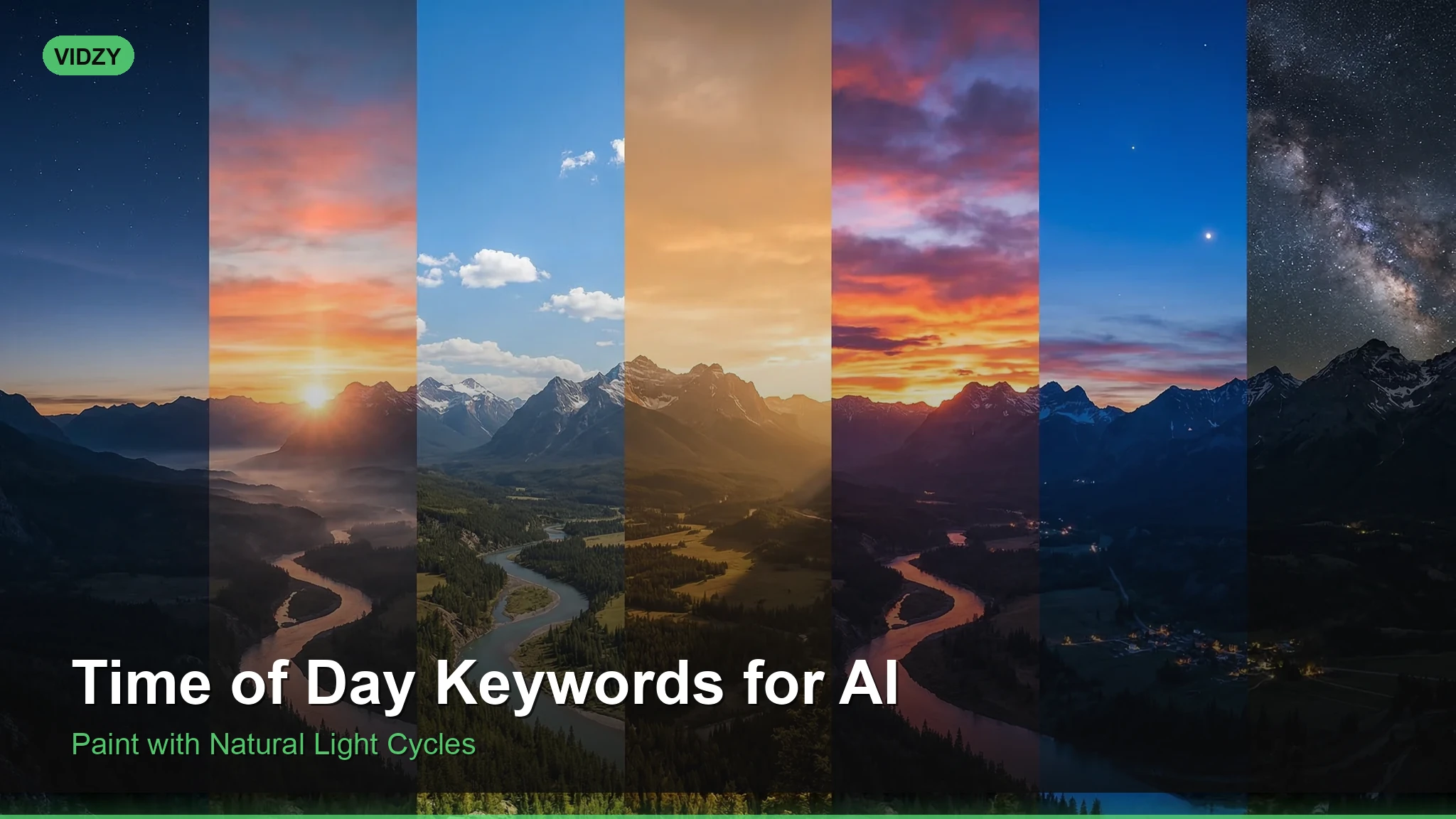
Specifying time of day AI prompts is one of the most powerful yet underutilized techniques in prompt engineering. The time of day doesn’t just change how bright an image is — it completely transforms the color temperature, shadow direction, atmospheric quality, and emotional tone of your entire scene. A city street at dawn looks nothing like the same street at midnight, and AI models understand these differences in extraordinary detail.
This guide walks through every major time period, the specific lighting characteristics each produces, and the exact keywords that activate those qualities in your AI generations.
Pre-Dawn: The Blue Hour (4:00–5:30 AM)
The blue hour occurs before sunrise when the sky takes on a deep, saturated blue tone. It’s one of the most photogenic times of day and one that AI models render beautifully when prompted correctly.
“City skyline during blue hour, deep cobalt sky transitioning to indigo at the zenith, buildings silhouetted with warm interior lights glowing from windows, still reflections in a harbor, pre-dawn serenity”
Key characteristics:
– Deep blue color cast across the entire scene
– No direct sunlight — all illumination is ambient
– Artificial lights (street lamps, windows, signs) become prominent warm accents against the cool blue
– Very soft, shadow-free ambient lighting
– Still, calm atmosphere
Keywords: blue hour, pre-dawn, cobalt sky, deep twilight blue, ambient blue light, no shadows, city lights against blue sky, serene stillness.
Best for: Cityscapes, architecture, seascapes, contemplative mood, travel photography.
Dawn: First Light (5:30–6:30 AM)
The first moments of sunlight create extraordinarily delicate lighting conditions. Light is soft, warm, and directional from a very low angle.
“Misty meadow at first light, low sun just breaking the horizon, long golden shadows stretching across dewy grass, warm light filtering through morning mist, birds silhouetted against a pink and gold sky”
Key characteristics:
– Extremely low sun angle creates long, dramatic shadows
– Warm golden-pink light
– Morning mist and dew are common and beautiful
– Soft quality due to light passing through maximum atmosphere
– Gentle, hopeful emotional tone
Keywords: dawn, first light, sunrise, low morning sun, long shadows, golden pink sky, morning mist, dewy, gentle warmth, breaking daylight.
Best for: Landscapes, nature photography, portraits with romantic lighting, hopeful/new beginning themes.
Golden Hour Morning (6:30–8:00 AM)
The morning golden hour delivers warm, directional light from a low angle. It’s similar to the evening golden hour but with a fresher, cleaner quality.
“Street cafe in Paris during morning golden hour, warm sunlight streaming down the boulevard at a low angle, long shadows of chairs and tables, golden light catching the steam from fresh coffee, pedestrians backlit with warm rim light”
Key characteristics:
– Warm golden light, slightly less orange than evening golden hour
– Low angle creates flattering facial lighting with natural fill from the sky
– Long but not extreme shadows
– Clean, fresh atmospheric quality
– Energetic yet gentle mood
Keywords: morning golden hour, warm morning light, low morning sun, fresh golden warmth, sunrise glow fading to warm daylight, backlit morning, golden rim light.
Mid-Morning (8:00–11:00 AM)
Often overlooked, mid-morning provides some of the most versatile and flattering natural lighting available. The sun is high enough to reduce harsh shadows but low enough to maintain directional quality.
“Product photography in natural mid-morning light, soft directional sunlight from a large window, gentle shadows providing dimension, neutral color temperature, clean and crisp illumination”
Key characteristics:
– Neutral to slightly warm color temperature
– Moderate shadow angles with good facial modeling
– Bright but not harsh
– Clear, clean atmospheric quality
– Professional and versatile
Keywords: mid-morning light, natural daylight, soft directional sun, window light, clean natural illumination, neutral warmth, moderate shadows.
Best for: Product photography, architectural interiors, real estate, natural portraits, commercial work.
High Noon (11:00 AM–1:00 PM)
Photographers often avoid midday sun, but for AI generation, specifying noon creates distinctive results that are perfect for certain use cases.
“Desert highway at high noon, harsh overhead sun creating minimal shadows directly beneath objects, bleached colors, heat haze rising from asphalt, stark and unforgiving sunlight, no cloud cover”
Key characteristics:
– Overhead sun creates short, directly-below shadows
– Harsh, high-contrast lighting
– Can cause unflattering under-eye shadows on faces
– Bright, sometimes blown-out highlights
– Intense, energetic, or oppressive mood depending on context
Keywords: midday sun, high noon, overhead harsh light, direct sunlight, high contrast, minimal shadows, bleached highlights, intense daylight, scorching sun.
Best for: Desert scenes, beach photography, harsh/intense atmospheres, architectural shadow studies, tropical settings.
Afternoon (1:00–4:00 PM)
Afternoon light begins to warm and angle, creating a sweet spot between the harshness of noon and the drama of golden hour.
“Residential neighborhood in afternoon light, warm dappled sunlight filtering through mature trees, shadow patterns on sidewalks, kids riding bikes, suburban tranquility, late afternoon glow beginning”
Key characteristics:
– Increasingly warm color temperature as the hour progresses
– Angled shadows beginning to lengthen
– Dappled light through trees becomes prominent
– Pleasant, everyday quality
– Relaxed, comfortable mood
Keywords: afternoon sunlight, warm afternoon, dappled light, tree shadows, lengthening shadows, comfortable warmth, lazy afternoon, gentle sun.
Golden Hour Evening (4:00–6:00 PM, varies by season)
The most beloved time of day for photographers and AI generation alike. Evening golden hour produces intensely warm, directional, flattering light.
“Portrait of a couple on the beach during golden hour, rich warm amber light wrapping around their faces, lens flare from low sun, long dramatic shadows on sand, ocean reflecting golden sky, romantic warmth”
Key characteristics:
– Rich amber-gold light, warmer than morning golden hour
– Very low angle creates dramatic long shadows
– Natural rim lighting on subjects facing away from sun
– Atmospheric haze adds golden glow to everything
– Romantic, warm, nostalgic emotional tone
Keywords: golden hour, magic hour, amber sunlight, low evening sun, warm backlight, golden rim light, long dramatic shadows, warm atmospheric haze, sunset glow.
Best for: Portraits, romance scenes, beach photography, landscapes, social media content. Vidzy makes it simple to generate golden hour content optimized for every platform.
Sunset (6:00–7:00 PM)
Sunset provides the most dramatic sky colors — vivid oranges, reds, purples, and pinks that transform any scene.
“Dramatic sunset over the ocean, sky ablaze with layers of orange, crimson, and deep purple, sun half-below the horizon, silhouetted palm trees, dramatic cloud formations catching the last light”
Key characteristics:
– Vivid warm sky colors (orange, red, purple, pink)
– Subjects in foreground often silhouetted
– Rapidly changing light conditions
– Dramatic and emotional
– Brief, fleeting quality
Keywords: sunset, burning sky, vivid sunset colors, crimson and gold, sun on the horizon, silhouette against sunset, dramatic twilight, painted sky.
Dusk and Twilight (7:00–8:00 PM)
The transition from day to night creates a unique dual-lighting scenario where fading natural light mixes with emerging artificial light.
“Tokyo street at dusk, neon signs and shop lights beginning to glow against a deep purple-blue sky, last traces of sunset on the horizon, wet streets reflecting both neon and sky color, the magical transition from day to night”
Key characteristics:
– Beautiful blend of cool ambient sky light and warm artificial lights
– Purple-blue sky retains some light but is clearly transitioning
– City scenes become magical as lights activate
– Balanced exposure between sky and street level
– Romantic, mysterious, transitional mood
Keywords: dusk, twilight, magic hour transition, purple sky, city lights emerging, neon against twilight, dual lighting, day-to-night transition.
Night (9:00 PM+)
Nighttime photography in AI generation opens up entirely different creative possibilities centered on artificial light sources.
“Rain-soaked city street at midnight, neon signs reflected in puddles, solitary figure under a street lamp pool of warm light, everything beyond the light pools fading into deep shadow, noir atmosphere”
Key characteristics:
– Dark scene with isolated light sources
– Strong contrast between lit and unlit areas
– Color determined by light source type (warm tungsten, cool LED, colorful neon)
– Reflections become prominent (wet surfaces, glass)
– Mysterious, dramatic, noir, or romantic mood
Keywords: nighttime, after dark, midnight, city lights, neon glow, street lamp pools, moonlight, star field, noir lighting, isolated light sources, deep shadows, wet reflections.
Best for: Urban photography, noir scenes, nightlife, astrophotography, moody portraits, cinematic stills.
Moonlight and Starlight
A special subcategory of night that replaces artificial light with natural celestial illumination.
“Ancient stone circle under full moonlight, silver-blue light casting long soft shadows across grass, millions of stars visible in clear sky, Milky Way arching overhead, mystical nocturnal atmosphere”
Keywords: moonlit, full moon illumination, silver-blue moonlight, starlit, Milky Way, celestial light, lunar glow, long exposure night sky.
Time of Day for Video Generation
For AI video, time of day affects not just lighting but also the sense of time passing. Adding temporal progression language creates dynamic results:
“Timelapse of a mountain landscape transitioning from golden hour through sunset into blue hour, clouds moving and changing color, shadows lengthening and disappearing, stars emerging”
For more on creating atmospheric videos, see our guide on weather and environment keywords. You can also explore mood and atmosphere techniques to complement your time-of-day prompting.
Frequently Asked Questions
What time of day produces the best AI-generated images?
Golden hour (both morning and evening) consistently produces the most visually appealing results because AI models have been trained on vast amounts of golden hour photography. However, the “best” time depends on your creative goal — noon is best for harsh desert scenes, blue hour is best for cityscapes, and night is best for noir atmospheres.
Can I specify exact times in my AI prompts?
Yes, and it often works well. “3:00 AM under street lights” or “5:45 AM just before sunrise” can be more precise than general time-of-day keywords. AI models map these times to their associated lighting conditions.
How does time of day interact with weather in AI prompts?
They multiply each other’s effects. “Overcast noon” is completely different from “clear noon.” “Rainy golden hour” produces different results than “clear golden hour.” Always specify both for maximum control.
What time of day is best for portrait prompts?
Golden hour provides the most flattering portrait light — warm, directional, with natural fill. Overcast midday also works well for even, shadow-free lighting. Avoid specifying high noon for portraits unless you want a deliberate harsh aesthetic.
Do time-of-day keywords affect the mood of the image?
Dramatically. Dawn feels hopeful and fresh. Noon feels intense or stark. Golden hour feels romantic and warm. Night feels mysterious or dramatic. Time of day is one of your strongest tools for emotional control. Explore our free AI tools to test different time settings.