AI Filmmaking Future: How Independent Cinema Is Being Reimagined
The AI filmmaking future is unfolding right now in apartments, home offices, and coffee shops around the world. Independent filmmakers who once needed minimum budgets of $50,000 to $500,000 and months of production time are creating visually ambitious short films and web series for a fraction of that cost—sometimes for less than the price of a single day of traditional production.
This isn’t replacing cinema. It’s expanding who gets to make it. For decades, the technical and financial barriers of filmmaking have filtered out countless creative voices. AI video generation is dismantling those barriers at a speed that’s reshaping the independent film landscape in real time.
Where AI Fits in the Filmmaking Pipeline
Understanding the AI filmmaking future requires looking at how these tools integrate into actual production workflows, not just theoretical capabilities. Currently, AI tools serve different roles at different stages of filmmaking.
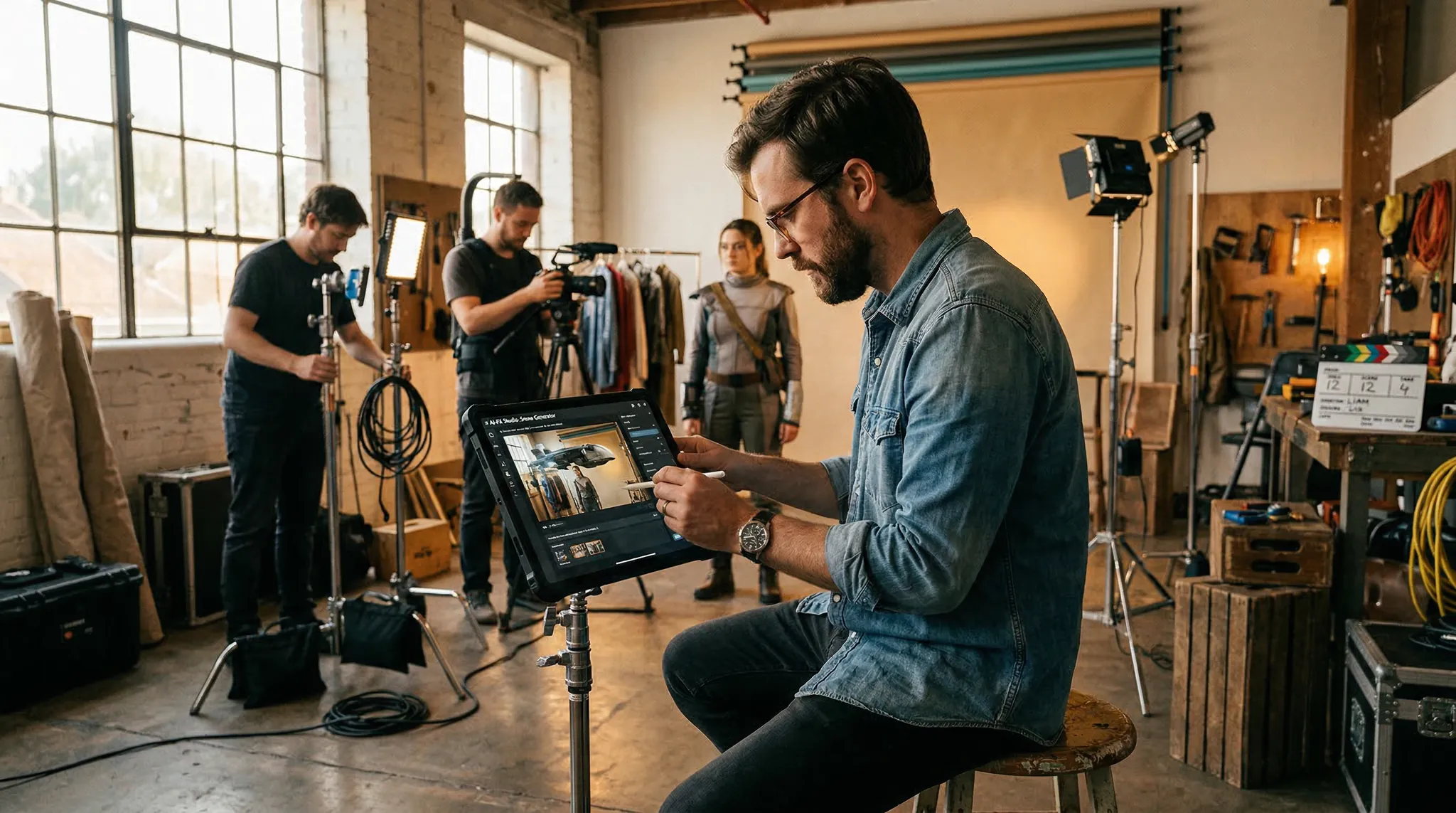
Pre-visualization. This is the most universally adopted use case. Before committing to expensive shoots, directors generate AI video previews of scenes to test framing, pacing, lighting concepts, and visual tone. What previously required storyboard artists or crude animatics can now be visualized as photorealistic video, enabling much more precise creative planning.
Establishing shots and B-roll. Location footage—cityscapes, landscapes, time-lapses, aerial shots—is expensive and logistically complex to capture. AI generation produces convincing establishing shots that maintain visual continuity with live-action footage. Many independent films already in distribution use AI-generated establishing shots, and audiences rarely notice.
Visual effects. AI has democratized VFX in ways that even recent advances in compositing software hadn’t achieved. Environment extensions, weather effects, set dressing modifications, and even creature design—work that previously required specialized VFX studios—can now be accomplished with AI tools by filmmakers with no VFX background.
Full scene generation. The most ambitious filmmakers are generating entire scenes using AI video tools. Models like Sora 2 can produce single-take scenes with coherent character action, natural camera movement, and convincing environmental detail. For sequences where specific human performances aren’t required—atmospheric montages, dream sequences, flashbacks, abstract interludes—AI-generated scenes are reaching production quality.
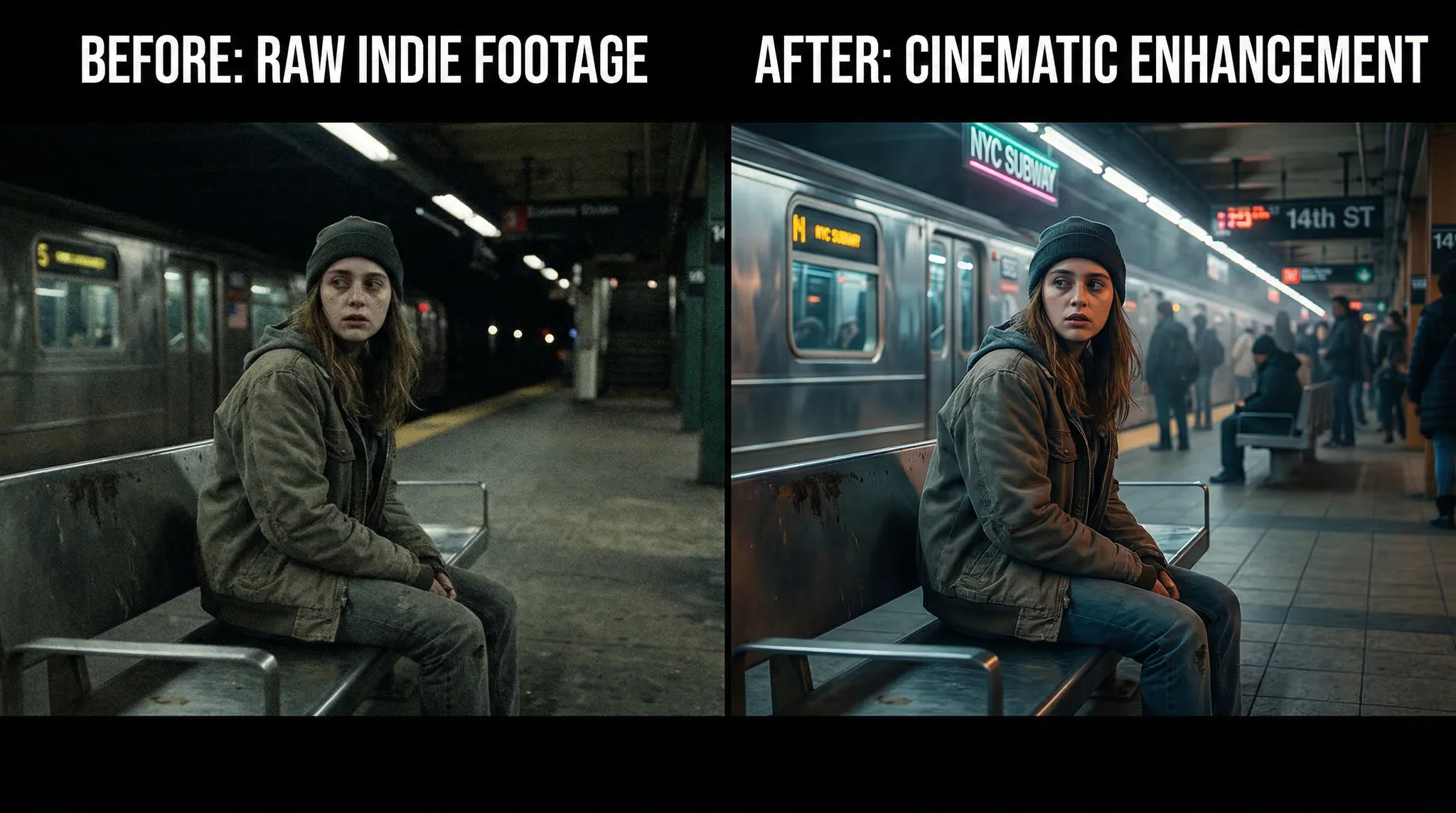
Post-production enhancement. AI tools are being used to upscale footage shot on budget cameras, correct color inconsistencies between takes, stabilize handheld footage, and enhance audio recorded with consumer equipment. These capabilities help independent filmmakers achieve technical quality that matches their creative ambitions.
Case Studies: How Indie Filmmakers Are Using AI Today
The micro-budget feature. A filmmaker in Austin completed a 75-minute science fiction feature film in early for under $3,000. The film combines live-action dialogue scenes shot in practical locations with AI-generated establishing shots, spaceship exteriors, alien landscapes, and visual effects sequences. The project would have been budgeted at $200,000 or more using traditional production methods.
The festival short. A director based in London produced a 12-minute period drama set in Victorian England without ever building a set or renting a single period costume. AI-generated establishing shots and B-roll created the historical setting, while tight framing on actors against neutral backgrounds (later replaced with AI-generated environments) provided the performance anchors. The film was accepted at three international film festivals.
The web series. A team of two people produces a weekly science fiction web series using a combination of AI-generated backgrounds, live-action performance capture, and AI-assisted editing. Each episode takes approximately 40 hours to produce—compared to the industry standard of 100 to 200 hours for equivalent content quality.
The Creative Possibilities That Didn’t Exist Before
AI filmmaking isn’t just about doing traditional filmmaking cheaper. It enables creative approaches that have no traditional equivalent.
Genre-fluid storytelling. When visual style is determined by text prompts rather than physical sets and equipment, a single film can shift between visual genres—photorealistic drama to animation to abstract expressionism—without the production overhead that would normally make such transitions prohibitively expensive.
Impossible locations and periods. A filmmaker can set scenes on Mars, in ancient Rome, inside a human cell, or in a surrealist dreamscape—all within the same project, all with consistent visual quality. Geographic and temporal constraints that defined film production for over a century simply evaporate.
Rapid prototyping of visual ideas. The creative iteration cycle compresses from weeks to hours. A director can experiment with how a scene looks in different lighting, different color palettes, different camera angles, and different visual styles before committing to any approach. This freedom to explore produces more refined creative choices.
Solo auteurship. The concept of the auteur filmmaker—a single creative voice controlling every aspect of a film—has always been somewhat theoretical, since traditional filmmaking requires collaboration by necessity. AI tools make genuine solo filmmaking practical for the first time, enabling uncompromised personal creative vision.
The Limitations and Challenges
Honest assessment of AI’s filmmaking limitations is essential for understanding the AI filmmaking future accurately.
Performance capture remains essential. AI-generated characters can walk, gesture, and interact with environments, but they cannot deliver the nuanced emotional performances that define great cinema. For any scene that relies on the subtlety of a human performance—a meaningful glance, a controlled tremor in a voice, physical comedy timing—real actors remain irreplaceable.
Character consistency across scenes. While character consistency has improved dramatically today, maintaining a character’s exact appearance across dozens of separately generated shots throughout a feature-length project remains challenging. Filmmakers manage this through careful prompt engineering, reference image systems, and accepting some variation as a creative feature rather than a bug.
Narrative coherence in generated sequences. AI generates visually stunning individual shots and short sequences, but it doesn’t understand narrative. The filmmaker must provide all storytelling intelligence—AI is a visual tool, not a storytelling partner. Sequencing, pacing, emotional arc, and narrative logic remain entirely the filmmaker’s responsibility.
The uncanny valley in close-ups. While medium and wide shots have crossed the quality threshold for production use, extended close-ups of AI-generated faces can still trigger uncanny valley discomfort. Most filmmakers handle this by using real actors for close-up performance scenes and AI generation for everything else.
Industry Response and Film Festival Culture
The independent film community’s response to AI tools has been more nuanced than headline-grabbing “AI vs. human” framings suggest.
Major film festivals have begun establishing categories and guidelines for AI-assisted filmmaking. Several festivals now include “AI-enhanced” categories alongside traditional competition sections, recognizing AI filmmaking as a legitimate creative discipline rather than a threat to human artistry.
The Directors Guild, Writers Guild, and Screen Actors Guild have all issued guidance on AI tool usage in production. The general framework emerging across the industry distinguishes between AI as a production tool (broadly accepted) and AI as a replacement for human creative labor (subject to collective bargaining protections).
Independent film distributors report growing audience acceptance of AI-enhanced content, with viewer satisfaction driven primarily by storytelling quality rather than production method. As AI quality has improved, the “made with AI” label has shifted from a perceived weakness to a point of curiosity and sometimes admiration.
Getting Started: AI Filmmaking Toolkit for Independents
For independent filmmakers ready to integrate AI into their workflow, here’s a practical starting point.
Text-to-video generation: Use Vidzy or similar platforms for establishing shots, B-roll, VFX sequences, and concept visualization. Start with non-critical shots to build your prompt engineering skills before tackling key visual sequences.
Image-to-video: Create still images of your desired scenes (using AI image generation, reference photography, or concept art) and animate them using image-to-video models. This provides much more precise control over the starting composition.
AI editing tools: Integrate AI-powered color grading, audio enhancement, and rough-cut assembly into your post-production workflow to handle technical tasks more efficiently.
Hybrid workflow: Combine live-action performance footage with AI-generated environments and effects. This approach plays to the strengths of both methods—human performances for emotional authenticity and AI generation for visual spectacle.
Frequently Asked Questions
Can you make a complete film using only AI?
Technically yes, but the most effective approach combines AI generation for visual elements with human performances, direction, editing, and storytelling. Fully AI-generated films exist but typically lack the emotional depth that human performances provide.
Do film festivals accept AI-generated content?
Increasingly, yes. Many festivals now include specific categories for AI-enhanced filmmaking, and AI-assisted films have been accepted into traditional competition sections when the creative vision and storytelling quality meet festival standards.
How much can AI reduce independent film budgets?
For projects that would traditionally rely heavily on locations, VFX, and production design—particularly science fiction, fantasy, and period pieces—AI can reduce budgets by 80 to 95 percent. For dialogue-driven dramas shot in practical locations, savings are more modest but still significant for B-roll, establishing shots, and post-production.
Will AI make film school obsolete?
No. AI handles visual production but doesn’t teach storytelling, direction, cinematographic theory, or the collaborative skills essential to filmmaking. Film education is evolving to incorporate AI tools alongside traditional skills, not being replaced by them.
Your Story Deserves to Be Told
The only thing standing between your creative vision and a finished film is the willingness to start. AI has removed the financial and technical barriers. Download Vidzy and begin pre-visualizing your project today—your first shot is minutes away, not months.
James Okafor is a tech journalist covering the AI generation space. With bylines in TechCrunch and The Verge, he brings an analytical lens to AI model reviews, industry trends, and the evolving landscape of creative AI tools.
Text Generation AI Images: How Models Solved Their Biggest Embarrassment Text generation AI images was the running joke of the generative AI world for three solid years. From 2022 through most of 2025, even the most powerful image models could produce breathtaking photorealistic scenes, stunning artistic compositions, and convincing human faces—but ask them to write […]
Open Source AI Models vs Closed Source: A Creator’s Decision Guide The debate over open source AI models versus closed source alternatives has moved from academic circles to practical relevance for every creator working with generative AI. Whether you’re generating images for social media, producing marketing assets, or exploring AI art as a creative medium, […]
Nano Banana 2: Everything You Need to Know About Google’s Latest Image Model Google has quietly released what many AI researchers and creators are calling the most significant image generation model . Nano Banana 2 — Google’s successor to the original Nano Banana model — represents a fundamental rethinking of how AI generates images, delivering […]
James Okafor
10 min read
Your Next Video Is 30 Seconds Away
Download Vidzy free, pick a template, and create your first video right now.