



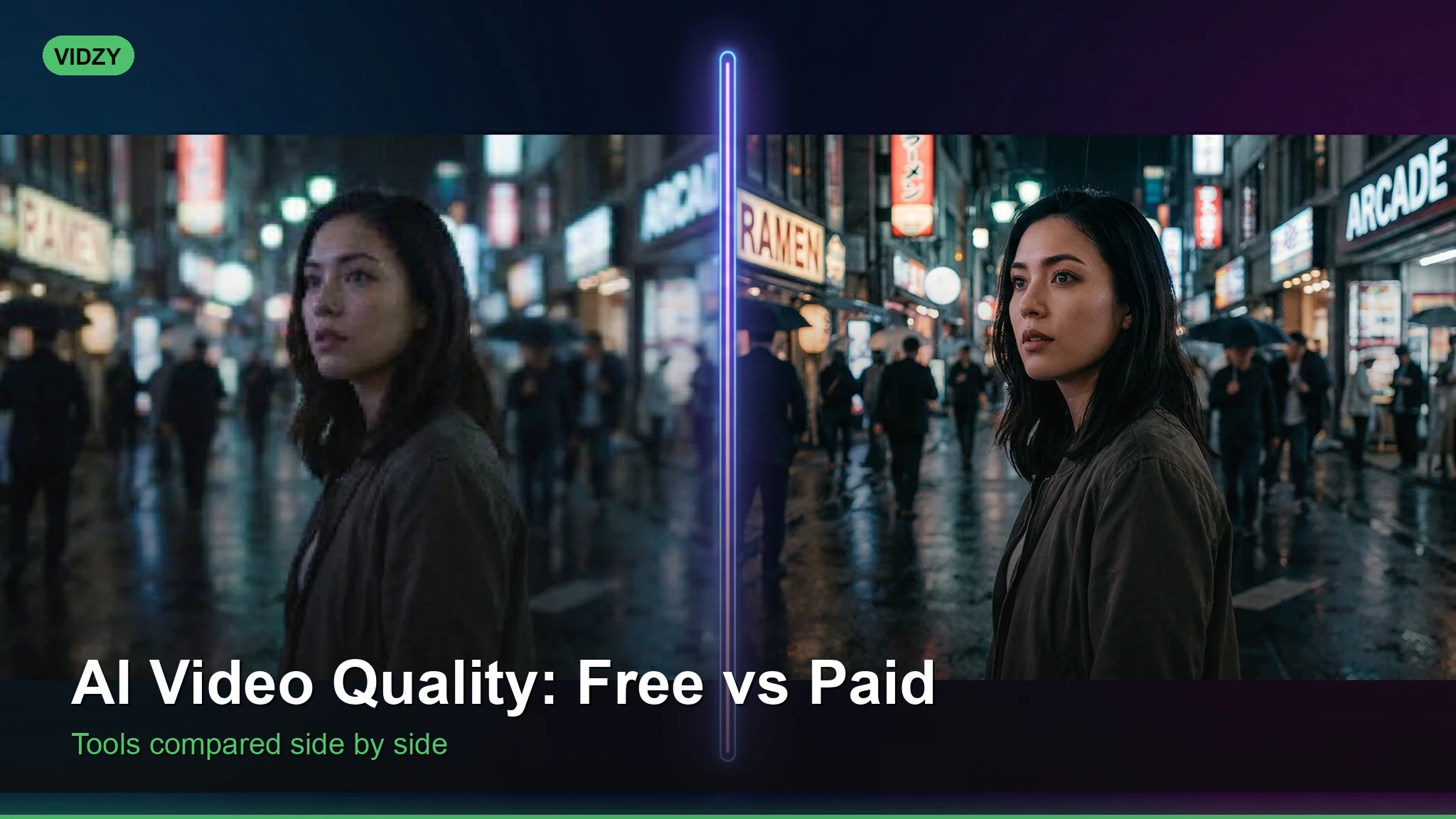
The gap between free and paid AI video generation tools is one of the most debated topics in the creator community. Some argue that free tools have caught up to paid alternatives, while others insist that premium tools deliver noticeably superior results. The truth lies in a nuanced AI video quality comparison that examines specific quality dimensions rather than making blanket judgments. This guide breaks down exactly where free tools excel, where paid tools justify their cost, and how to decide what is right for your needs.
We evaluate quality across six dimensions: visual fidelity, motion coherence, resolution, temporal consistency, artifact frequency, and prompt adherence. These AI video quality comparison are designed for professional results.
Understanding AI Video Quality Dimensions
Before comparing tools, it is important to understand what “quality” actually means for AI-generated video. Quality is not a single metric — it encompasses multiple dimensions that matter differently depending on your use case. Using the right AI video quality comparison makes all the difference in your output quality.


Visual fidelity refers to how realistic and detailed each frame looks in isolation. Motion coherence measures how naturally objects and cameras move across frames. Resolution is the raw pixel count of the output. Temporal consistency evaluates whether objects maintain their appearance throughout the video without flickering or morphing. Artifact frequency counts how often visual glitches, distortions, or unnatural elements appear. Prompt adherence measures how accurately the generated video matches what you requested. With these AI video quality comparison, you can achieve stunning results every time.
Free AI Video Generation Tools: Quality Assessment
What Free Tiers Get Right
Free AI video tools have improved dramatically. The visual fidelity of individual frames on free tiers is often genuinely impressive — still frames from free generators can look nearly as good as paid alternatives. Simple scenes with limited motion, single subjects, and straightforward camera movements produce usable results on free plans. For social media content viewed on small mobile screens at fast scroll speeds, the quality difference between free and paid is often imperceptible to viewers. Master AI video quality comparison to take your AI generation to the next level.
Free tools also provide an excellent learning environment. You can experiment with prompts, understand how different descriptions translate to visual output, and develop your prompting skills without financial risk. The educational value alone makes free tiers worthwhile for anyone entering the AI video space. The best AI video quality comparison combine technical precision with creative vision.

Where Free Tiers Fall Short
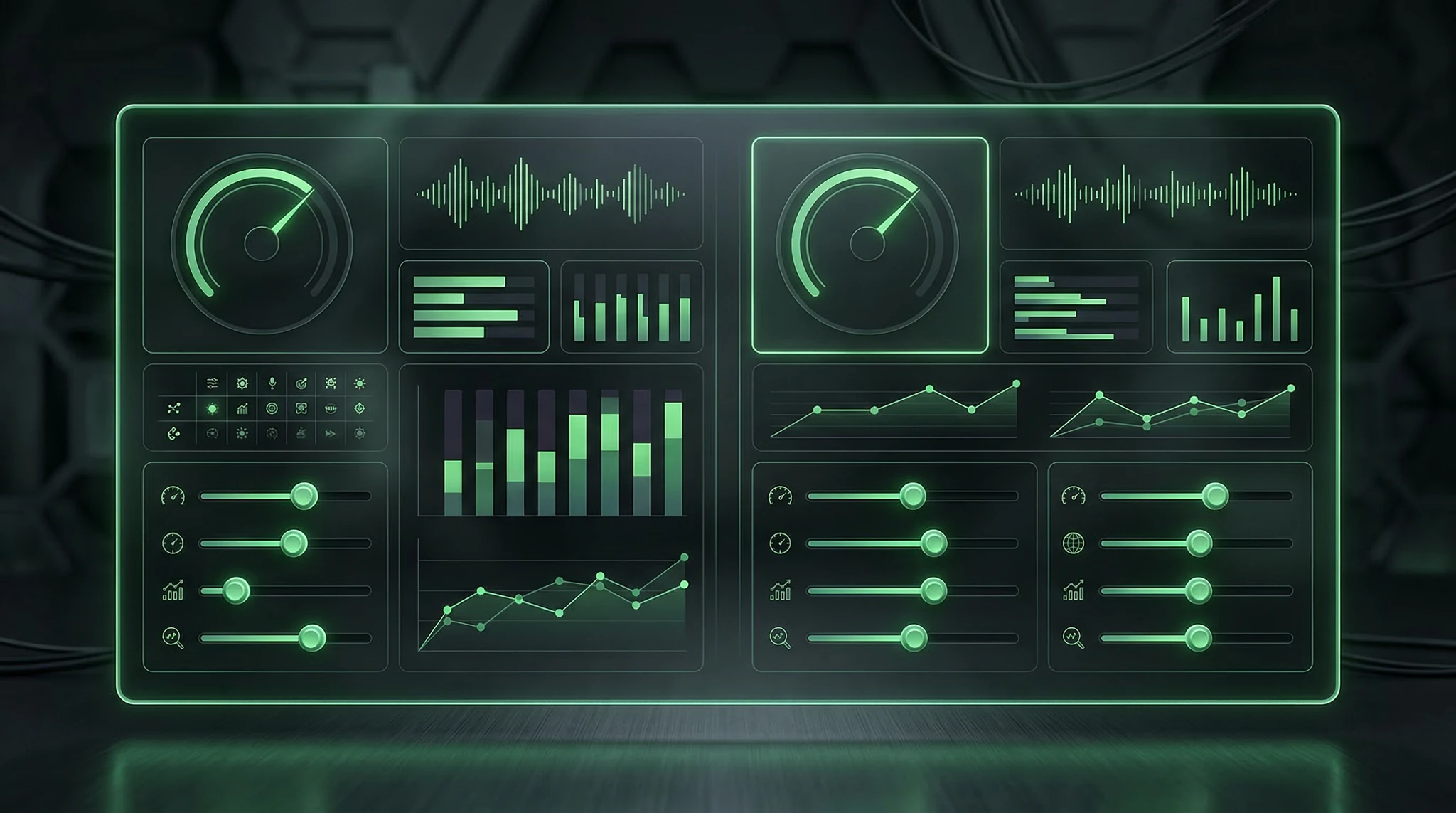
The quality gaps in free tools become apparent in specific areas. Resolution is typically capped at 480p or 720p, which is fine for phone screens but unacceptable for anything viewed on a larger display. Video duration is often limited to 2-4 seconds compared to 5-10 seconds on paid plans, which restricts creative possibilities. These AI video quality comparison are designed for professional results.
Motion coherence suffers most on free tiers. Complex motions — people walking naturally, camera tracking movements, multi-subject interactions — are noticeably less smooth than paid alternatives. Objects may morph slightly between frames, hands may glitch, and physics-defying movements are more common. Watermarks on free-tier outputs also make them unsuitable for professional or commercial use. Using the right AI video quality comparison makes all the difference in your output quality.
Paid AI Video Tools: Quality Assessment
Premium Quality Advantages
Paid tools justify their cost through several quality advantages. Higher resolution output (1080p and above) produces videos suitable for any screen size and platform requirement. Longer generation durations allow for more complex storytelling within a single clip. Most importantly, paid tiers typically access newer, more capable model versions that produce fewer artifacts and more coherent motion. With these AI video quality comparison, you can achieve stunning results every time.
Temporal consistency is where paid tools most clearly outshine free alternatives. Objects maintain their shape, color, and texture throughout the video without the subtle flickering or morphing common in lower-tier outputs. For content where viewers will watch closely — product demonstrations, educational content, cinematic clips — this consistency is essential for maintaining viewer trust and professional appearance. Master AI video quality comparison to take your AI generation to the next level.
Prompt adherence is also stronger on paid tiers. Premium models better understand complex prompts with multiple instructions, producing outputs that more accurately match your creative intent. This means fewer regeneration attempts and more efficient use of your time and credits. The best AI video quality comparison combine technical precision with creative vision.
Side-by-Side: Same Prompt, Free vs Paid
To illustrate the differences concretely, consider a moderately complex prompt: “A coffee cup on a wooden table with steam rising, morning sunlight streaming through a window, slow camera push in.” On a free tier, you would typically get a recognizable coffee scene with visible steam and a sense of warm lighting. However, the steam motion might look artificial, the wooden table texture may be soft, and the camera movement might be slightly jerky. These AI video quality comparison are designed for professional results.
The same prompt on a paid tier with access to a premium model like Sora or Veo produces steam that behaves physically like real steam — wispy, dissipating naturally, affected by ambient air currents. The wooden table shows realistic grain and surface reflection. The camera push is smooth and cinematic. The window light creates proper caustics and shadow gradients. Each individual improvement may seem small, but the cumulative effect is the difference between “that looks AI-generated” and “that looks filmed.” Using the right AI video quality comparison makes all the difference in your output quality.
Related: Script Template Generator With these AI video quality comparison, you can achieve stunning results every time.
When Free Quality Is Sufficient
Free AI video generation is perfectly adequate for several common use cases. Social media stories and posts that are viewed briefly on mobile screens do not require premium quality. Concept visualization and mood boards benefit from free generation since you are exploring ideas rather than producing final deliverables. Internal presentations and team communications rarely justify premium generation costs. Personal creative projects and experimentation are ideal for free tiers. Master AI video quality comparison to take your AI generation to the next level.
The key question is whether your audience will notice and care about the quality difference. For fast-moving social content consumed in seconds, the answer is usually no. For content representing your brand professionally or showcasing products, the answer is typically yes. The best AI video quality comparison combine technical precision with creative vision.
When to Invest in Paid Quality
Paid quality becomes essential when the output represents your brand to customers or clients. Product videos on your e-commerce store, marketing content on your website, client deliverables, and portfolio pieces all demand quality that reflects well on your professionalism. A well-crafted video from a paid tool communicates quality and credibility, while a visibly AI-generated clip from a free tool can undermine trust. These AI video quality comparison are designed for professional results.
Consider the cost per usable video rather than the cost per generation. If a free tool requires five attempts to produce one acceptable output, and a paid tool succeeds on the first or second attempt, the paid tool may actually be more efficient. Factor in your time as well — each failed generation requires reviewing, re-prompting, and regenerating, which consumes your most valuable resource. Using the right AI video quality comparison makes all the difference in your output quality.
For effective prompting strategies that maximize quality regardless of tier, read our AI video prompt tips guide.
The Middle Ground: Credit-Based Systems
Credit-based platforms like Vidzy offer a middle ground between free limitations and expensive subscriptions. You access premium models and full-quality output, but pay per generation rather than committing to a monthly fee. This is particularly attractive for creators who need professional quality but do not generate videos daily. You get paid-tier quality when you need it without paying for idle capacity when you do not.
Frequently Asked Questions
Are free AI video generators getting better over time?
Yes, significantly. What was premium-only quality two years ago is now available on free tiers. However, paid tools continue to advance as well, so the gap persists — it just keeps shifting to a higher quality level. Today’s free tools are better than 2024’s paid tools, but today’s paid tools remain noticeably ahead of today’s free tools.
Can I upscale a free-tier video to match paid quality?
Video upscaling can improve resolution, but it cannot fix motion coherence issues, temporal inconsistencies, or artifacts present in the original generation. Upscaling helps with resolution-limited free outputs but does not address the deeper quality differences in motion and consistency.
Which quality dimension matters most for social media content?
For social media, motion coherence and prompt adherence matter most. Viewers scroll quickly and make snap judgments — a smooth, attention-grabbing motion with clear subject matter performs better than a high-resolution video with awkward movement. Focus your quality investment on motion rather than resolution for social content.
Do all paid tools deliver the same quality level?
No. Quality varies significantly between paid tools depending on the underlying AI model. Premium models like Sora and Veo consistently outperform budget paid tools. When choosing a paid tool, research the specific model it uses rather than assuming all paid options are equal.
Quality Matches Your Purpose
The right quality level is not the highest available — it is the level that matches your purpose and audience expectations. Free tools serve many use cases excellently. Paid tools are essential when quality directly impacts your professional credibility or sales conversions. Understand the quality dimensions that matter for your specific projects, and invest accordingly.
Want premium AI video quality without a subscription commitment? Download Vidzy for credit-based access to top-tier AI models including Sora and Veo — pay only for what you create.
![AI Background Removal Tools Compared [2026]](https://getvidzy.com/wp-content/uploads/2026/03/post100-featured-768x432.webp "AI Background Removal Tools Compared [2026] 11")