


Transform Your Interior Design Ideas into Photorealistic Visualizations with AI Prompts
Interior designers, architects, real estate agents, and homeowners share the same frustration: imagining a space is easy, but showing it to someone else requires expensive 3D rendering software, professional visualization skills, or hiring a rendering studio. AI interior design prompts have fundamentally changed this equation. In minutes, you can generate photorealistic room visualizations that would have cost hundreds or thousands of dollars just a few years ago.
The applications are immediate and practical. Designers can present multiple concepts to clients without spending hours in SketchUp. Real estate agents can show what an empty room could look like furnished and styled. Homeowners can visualize renovation ideas before committing to contractors. Furniture brands can showcase their products in aspirational settings.
This guide provides detailed prompts for every room type, design style, and practical application. Whether you are furnishing a studio apartment or designing a boutique hotel lobby, these prompts will help you create compelling interior visualizations.
Fundamentals of AI Interior Design Prompts
Interior design visualization has specific requirements that differ from general image generation. Understanding these fundamentals will dramatically improve your results.
Perspective and viewpoint: Interior photography uses specific camera angles. Wide-angle shots (24-35mm equivalent) show the overall room layout. Detail shots at standard focal lengths (50-85mm) highlight specific areas. Always specify your camera position and angle.
Lighting is everything: Interior lighting defines the mood and realism of a space. Natural light from windows, artificial lighting from fixtures, and ambient bounce light all need to be considered. Specify the time of day, window direction, and light quality.
Material specification: Interiors are defined by their materials — wood types, stone varieties, fabric textures, metal finishes. The more specific your material descriptions, the more realistic the result. Say “white oak herringbone flooring” not “wooden floor.”
Scale and proportion: Interior spaces need to feel realistically proportioned. Specify ceiling heights, room sizes, and furniture scale to prevent the AI from generating spaces that feel off.
Design style consistency: Every element should belong to the same design language. Mixing “industrial exposed brick” with “ornate French provincial furniture” without intention creates visual chaos.
AI Prompts by Design Style
Each design style has distinct characteristics. These prompts capture the essential elements that define each aesthetic.
Modern Minimalist
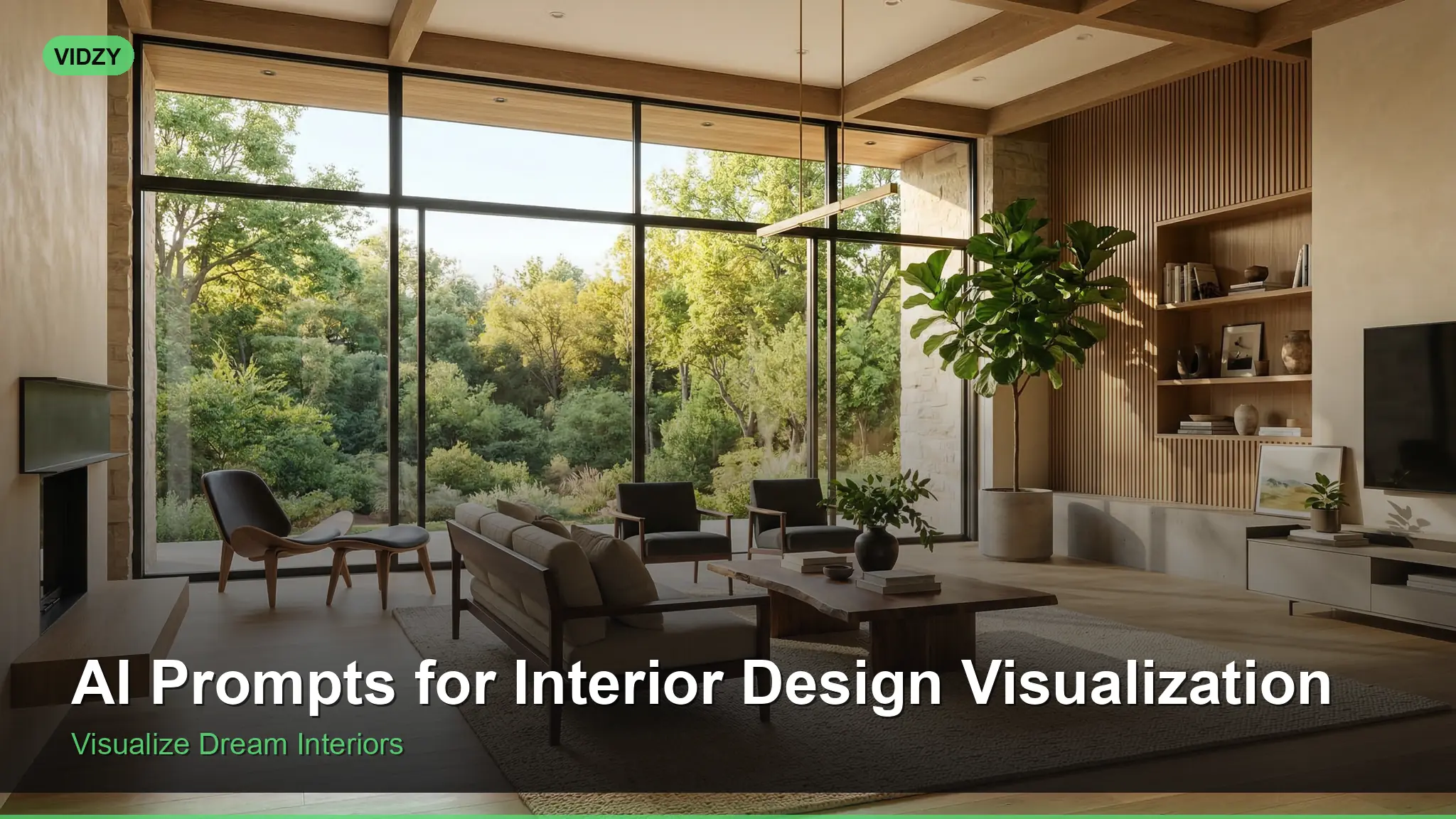
Prompt: “Photorealistic interior design visualization of a modern minimalist living room, white walls with subtle warm undertone, light white oak wide-plank flooring, low-profile gray linen sofa with clean lines, single statement floor lamp with brass finish, large abstract art piece on wall, floor-to-ceiling windows with sheer white curtains, soft natural daylight, negative space as a design element, warm neutral color palette, shot on 24mm wide-angle lens from corner perspective, Architectural Digest quality”
Mid-Century Modern
Prompt: “Interior design photograph of a mid-century modern living room, warm walnut wood furniture with tapered legs, iconic Eames lounge chair in black leather, low credenza with vinyl records, terrazzo floor with a vintage area rug in mustard and teal, starburst wall clock, large potted fiddle leaf fig plant, warm afternoon light through geometric curtains, earth tones with pops of orange and teal, retro-modern atmosphere, 35mm lens perspective from doorway”
Scandinavian
Prompt: “Scandinavian interior design visualization, bright and airy living room with white walls and light ash wood floors, simple functional furniture in natural materials, cozy sheepskin throw over a minimal wooden chair, pendant light with organic shape, dried pampas grass in a ceramic vase, muted color palette of whites, light grays, and soft blush, maximum natural light from large windows, hygge atmosphere, clean and calming, wide-angle interior photography”
Industrial
Prompt: “Industrial loft interior design visualization, open-plan living space in a converted warehouse, exposed red brick walls, original steel support columns, polished concrete floor, oversized factory windows with black steel frames, vintage leather Chesterfield sofa, reclaimed wood coffee table on steel hairpin legs, exposed Edison bulb pendant lights, warm afternoon light creating dramatic shadows, raw and authentic materials, high ceilings visible, shot from low angle”
Japanese Wabi-Sabi
Prompt: “Japanese wabi-sabi interior design, serene minimalist room with tatami mat flooring, low wooden platform bed with natural linen bedding, shoji screen panel filtering soft light, single branch in a handmade ceramic ikebana vase, subtly textured plaster walls in warm off-white, natural imperfections celebrated, warm diffused light, contemplative and peaceful atmosphere, neutral earth tones, wide-angle composition showing the harmony of empty space”
Art Deco
Prompt: “Luxurious Art Deco interior design visualization, glamorous living room with geometric patterned wallpaper in gold and deep green, velvet emerald green sofa with brass nailhead trim, mirrored cocktail table, statement chandelier with crystal and brass, lacquered black furniture, marble fireplace with geometric surround, rich jewel-tone color palette, dramatic warm lighting, opulent 1920s luxury, interior shot from centered perspective”
Bohemian
Prompt: “Bohemian interior design of a cozy bedroom, layered textiles in warm earthy tones — kilim rugs, macrame wall hanging, embroidered throw pillows, moroccan leather pouf, rattan peacock chair, indoor plants in terracotta pots creating an indoor jungle feel, string lights draped above a brass bed frame, warm golden evening light, eclectic collected-over-time feel, warm and inviting, textured and layered”
AI Interior Design Prompts by Room Type
Different rooms have different functional and aesthetic requirements.
Kitchen
Prompt: “Modern farmhouse kitchen interior design, white shaker cabinets with brass knob hardware, Calacatta marble waterfall countertop on the island, open shelving displaying ceramics and cookbooks, aged brass pendant lights over the island, wide white oak plank floors, apron-front sink under a window overlooking a garden, subway tile backsplash with dark grout, professional-grade stainless range, morning sunlight flooding through windows, warm and functional, shot from across the island showing the full kitchen layout”
Bathroom
Prompt: “Spa-inspired bathroom interior design visualization, freestanding soaking tub in matte white against a wall of floor-to-ceiling veined marble, walk-in rainfall shower with frameless glass, floating vanity in warm walnut with vessel sink, brass fixtures throughout, large round mirror with integrated lighting, eucalyptus branches in a vase, soft indirect lighting from hidden LED strips, steam visible, serene and luxurious atmosphere, neutral palette of white marble, warm wood, and brass”
Home Office
Prompt: “Contemporary home office interior design, large walnut desk with minimal cable management, ergonomic task chair in cognac leather, floor-to-ceiling built-in bookshelves with styled objects and books, large window with view of trees providing natural light from the left, warm brass desk lamp for task lighting, abstract art above the desk, indoor plant in the corner, professional yet personal atmosphere, organized and inspiring workspace, afternoon directional light”
Bedroom
Prompt: “Luxurious master bedroom interior design, upholstered king bed with tall headboard in mushroom velvet, high-thread-count white linen bedding with textured throws, matching nightstands in brushed oak with sculptural ceramic table lamps, plush area rug on dark hardwood floors, blackout curtains in natural linen partially drawn revealing a city view at dusk, warm ambient lighting from lamps creating a cocoon-like atmosphere, sophisticated and restful, hotel suite quality”
Prompts for Real Estate and Property Marketing
Real estate professionals can use AI interior design prompts to stage empty properties virtually.
Prompt: “Virtual staging of an empty apartment living room, the room has hardwood floors, white walls, two large windows on the left wall, and a brick fireplace. Stage with a modern neutral-toned sectional sofa facing the fireplace, round coffee table, area rug, floor lamp, and tasteful wall art. Keep styling minimal and universally appealing. Realistic natural daylight from windows, wide-angle real estate photography perspective, clean and aspirational but achievable”
Prompt: “Before-and-after renovation visualization, show a modern updated kitchen in a space with [specific room dimensions and features]. New design includes white quartz countertops, navy blue lower cabinets, white upper cabinets, gold hardware, modern pendant lights, new tile backsplash, updated stainless appliances. Photorealistic rendering matching the natural light conditions of the original space”
For real estate marketing, pair your interior visualizations with the right social media strategy. Our Hashtag Generator can help you reach potential buyers across platforms.
Advanced Techniques for Better Interior Visualizations
Time-of-day variations: Generate the same room at different times to show how natural light transforms the space. “Morning light streaming from east-facing windows” versus “golden hour warm light from west windows” versus “evening with interior lighting only, windows showing blue dusk sky.”
Seasonal styling: Show how a room adapts to seasons. Swap throw blankets, flowers, and accent colors between summer (linen, fresh flowers, light palette) and winter (chunky knits, candles, rich warm tones).
Material and color swaps: Keep the room layout identical and change only the finishes. “Same kitchen layout but with black cabinets and white marble” versus “sage green cabinets and butcher block counters.” This is incredibly useful for client presentations.
Focal length for different purposes: Use 24mm for full room overviews that show layout and flow. Use 35mm for corner-to-corner shots that feel natural. Use 50-85mm for vignette shots that highlight specific areas like a reading nook or a styled shelf.
Our AI Prompt Generator can help you structure complex interior design prompts with all the necessary details for consistent, professional results.
Frequently Asked Questions
Which AI tool produces the most realistic interior design images?
Flux consistently produces the most photorealistic interior visualizations, particularly for lighting accuracy and material rendering. Midjourney creates more atmospheric and aesthetically pleasing interiors that work well for inspiration and mood boards. For precise, client-presentation-quality renders, Flux is the stronger choice.
Can AI interior design images replace professional 3D rendering?
For concept presentation, inspiration, and early-stage design exploration, AI-generated images are excellent and much faster than traditional 3D rendering. For final architectural documentation, precise measurements, and construction-grade visualization, professional 3D rendering remains necessary. AI works best as a complement to traditional tools, not a complete replacement.
How do I make AI interiors look less “perfect” and more realistic?
Add lived-in details: “a stack of books on the coffee table,” “a throw blanket casually draped over the sofa arm,” “a half-drunk cup of coffee.” Real rooms are never perfectly styled. Also specify “natural slight asymmetry in arrangement” and “authentic lived-in atmosphere.”
Can I use AI for commercial interior design client presentations?
Yes. Many interior designers now use AI-generated visualizations in their client presentation process, particularly for concept exploration and style direction discussions. Be transparent with clients that these are AI-generated concept images, not precise architectural renders. Use them to establish design direction before investing in detailed technical drawings.
How do I specify exact paint colors in AI prompts?
Rather than using brand-specific color names (which AI may not recognize), describe the color precisely: “warm gray with a slight green undertone, similar to sage but more neutral, approximately the lightness of concrete” gives better results than “Benjamin Moore Revere Pewter.” You can also reference the hex code for precision.
Bring Your Interior Design Visions to Life
AI interior design prompts have unlocked a new workflow for anyone who thinks in spaces — designers, architects, homeowners, and real estate professionals alike. What used to require specialized software and hours of 3D modeling can now be explored in minutes through carefully crafted text prompts.
Start with the style and room type that matches your project, customize the materials, colors, and lighting to match your vision, and iterate. The more specific your material descriptions and lighting specifications, the more photorealistic and useful your visualizations become.
Ready to take your design content to the next level? Create walkthrough videos of your designed spaces using our AI Prompt Generator, and check our Platform Size Guide to share your visualizations perfectly across Instagram, Pinterest, and beyond.