

Why AI Watercolor Prompts Create Art That Feels Genuinely Handmade
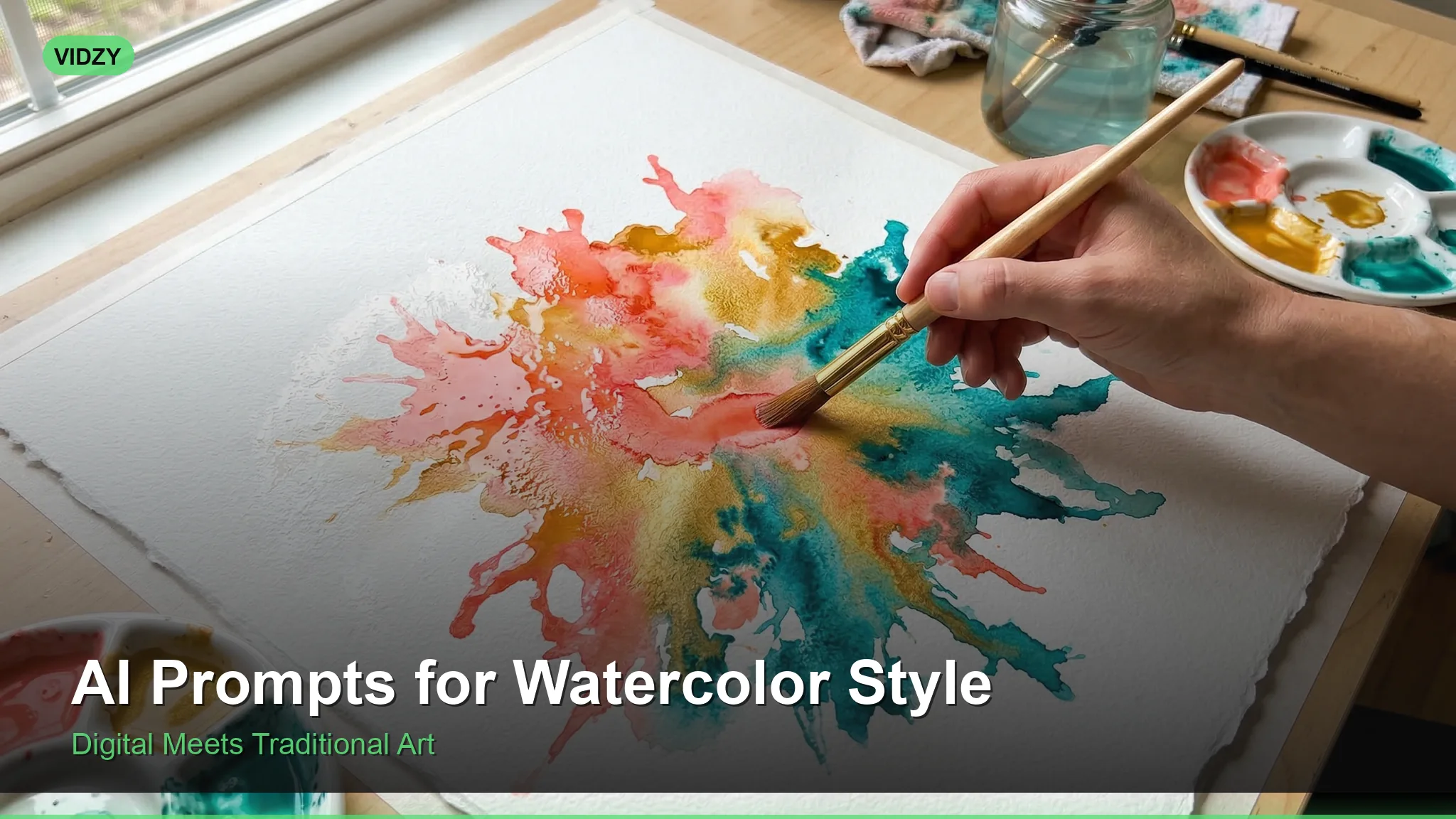
Watercolor is arguably the most difficult traditional medium to master. The paint has a mind of its own — bleeding, blooming, and blending in ways that even experienced artists can’t fully control. That beautiful unpredictability is precisely what makes AI watercolor prompts so compelling when done right. The best AI-generated watercolor art doesn’t look like a digital filter applied to a photograph. It looks like a skilled artist sat down with Winsor & Newton pigments, a sable brush, and cold-pressed Arches paper to paint something with genuine intention and controlled spontaneity.
This guide covers prompts for every major watercolor approach — loose and expressive, tight and botanical, moody and atmospheric, whimsical and illustrative. You’ll learn the specific vocabulary that triggers authentic watercolor rendering rather than generic “painted” effects.
The Key Terms That Unlock Authentic Watercolor AI Art
AI models distinguish between different types of painted effects based on specific vocabulary. These terms make the difference between a convincing watercolor and a generic “painterly” image: These AI watercolor prompts are designed for professional results.
Wet-on-wet produces soft, diffused edges where colors bleed into each other. Wet-on-dry creates sharper, more controlled edges. Blooming or cauliflower effect describes the beautiful accidental patterns that form when water pushes pigment outward. Granulation refers to the speckled texture of certain heavy pigments settling into paper grain. Lifting describes areas where paint has been removed to reveal the white paper beneath. Cold-pressed paper texture triggers the visible tooth of watercolor paper that gives authentic character to the rendering.
Loose & Expressive Watercolor Prompts
Loose watercolor embraces the medium’s spontaneity. These prompts prioritize gesture, flow, and the beauty of imperfect edges. Using the right AI watercolor prompts makes all the difference in your output quality.
Prompt: “Loose watercolor painting of a Venice canal scene. Impressionistic rendering — buildings suggested by washes of warm ochre, terracotta, and faded rose with architectural details only hinted at with minimal brushwork. Gondola painted with a few confident dark brushstrokes. Water rendered as fluid horizontal washes of cerulean blue and reflected warm tones, wet-on-wet technique allowing colors to bloom and merge. Visible white paper left unpainted in areas to create sparkle and light on the water. Painted on cold-pressed Arches paper, visible paper texture throughout. In the style of Alvaro Castagnet.”
Prompt: “Expressive watercolor portrait of a jazz musician playing saxophone. The figure painted in quick, confident strokes — the face suggested with minimal marks, the hands more detailed around the instrument. Splashes of raw umber and burnt sienna for skin tones. The saxophone rendered in new gamboge (golden yellow) and raw sienna with touches of violet for shadow. Background is a loose wash of smoky indigo bleeding outward, suggesting a dim club. Drips running down from the figure adding energy. Intentional white spaces. Plein air painting feel.” With these AI watercolor prompts, you can achieve stunning results every time.
Prompt: “Loose watercolor still life of wildflowers in a glass jar. Flowers painted with quick, gestural brushstrokes — poppies in cadmium red, cornflowers in ultramarine, daisies left as white paper with yellow centers. Stems and leaves in various greens applied wet-on-wet so they blend softly. The glass jar suggested with a few cerulean lines and the impression of transparency. Water visible inside the jar with submerged stems. Paint splatters and drips around the composition adding spontaneity. Warm afternoon light from the left.”
Botanical & Scientific Watercolor Prompts
Botanical watercolor demands precision — the opposite of loose work. These prompts create detailed, scientifically accurate plant illustrations in the tradition of natural history art. Master AI watercolor prompts to take your AI generation to the next level.
Prompt: “Botanical watercolor illustration of a peony in full bloom. Precise, layered rendering of every petal in soft pinks, deep magenta, and cream whites. Multiple transparent washes built up to create depth and volume in the flower head. Each petal shows subtle veination and translucent quality where light passes through thin tissue. Detailed leaves in sap green with visible serrated edges and vein patterns. A bud and cross-section study shown beside the main bloom. Clean white background with subtle shadow grounding the specimen. In the style of Pierre-Joseph Redoute. Museum-quality botanical art.”
Prompt: “Scientific watercolor illustration of a European robin (Erithacus rubecula). Ornithological accuracy in proportions and plumage detail. Feathers rendered with fine layered washes — warm olive-brown on the back, the distinctive orange-red breast built up from thin glazes of cadmium orange and burnt sienna. Tiny details: the bright dark eye with a light reflection point, the thin legs in pinkish-gray, each claw precisely rendered. The bird perched on a hawthorn branch with a few red berries and leaves. Clean white background. In the style of John James Audubon or Lars Jonsson.” The best AI watercolor prompts combine technical precision with creative vision.
Atmospheric & Moody Watercolor Prompts
Watercolor excels at atmosphere — mist, rain, twilight, and mood. These prompts leverage the medium’s transparent washes to create evocative scenes.
Prompt: “Atmospheric watercolor landscape of a misty morning in the English Lake District. Soft, layered washes creating depth through progressively lighter values. Foreground: dark silhouettes of dry stone walls and bare trees in Payne’s gray and burnt umber. Middle ground: hills rendered in muted green-gray washes, edges softened by mist. Background: mountain peaks barely visible as the palest blue-gray ghosts. The entire painting unified by a cool, damp atmosphere. Wet-on-wet technique throughout, edges bleeding and diffusing. White paper visible in the sky area suggesting low cloud. Minimal detail, maximum mood.” These AI watercolor prompts are designed for professional results.
Prompt: “Moody watercolor seascape at dusk. Heavy storm clouds painted in layers of Payne’s gray, indigo, and purple, allowing granulation texture to emerge in the darker washes. The sea is a deep, cold mixture of ultramarine and viridian with white paper left for wave crests catching the last light. A distant lighthouse emits a warm cadmium yellow glow. The horizon line blurred where sea mist meets cloud base. Dramatic, Turner-esque quality. Painted on rough paper to maximize texture.”
Whimsical & Illustrative Watercolor Prompts
Prompt: “Whimsical watercolor illustration of a cozy bookshop interior. Shelves overflowing with colorful books painted in cheerful washes — reds, blues, greens, yellows. A cat sleeping on a stack of books near a window. Warm afternoon light streaming through the window creating soft yellow puddles on the wooden floor. Details painted with a fine brush: tiny book titles, a steaming cup of tea, a pair of reading glasses. The style balances detail with loose, spontaneous watercolor technique. Charming, warm, inviting. Illustrated children’s book quality. Ink outlines with watercolor fill.” Using the right AI watercolor prompts makes all the difference in your output quality.
Prompt: “Watercolor and ink illustration of a magical garden gate. A wrought-iron gate overgrown with climbing roses (painted in soft pinks and reds) partially open, revealing a mysterious garden path beyond. Butterflies and bees rendered with tiny, precise brushstrokes. The gate’s ironwork drawn in fine black ink with watercolor washes for rust and patina. The garden beyond shown in blurred, dreamy washes of green and gold suggesting an enchanted space. Dappled sunlight effect. Fairy tale atmosphere. Fine pen and wash technique.”
Oil Painting & Gouache Style Prompts
While watercolor is the focus, related painted styles round out your artistic toolkit. With these AI watercolor prompts, you can achieve stunning results every time.
Prompt: “Oil painting of a Tuscan countryside in late summer. Thick, buttery brushstrokes of cadmium yellow and yellow ochre for wheat fields. Dark green cypress trees rendered with vertical palette knife strokes. A stone farmhouse in warm sienna with terracotta roof tiles, each tile suggested with a single loaded brush mark. Impasto technique visible — paint ridges casting tiny shadows. The sky painted in swift, confident strokes of cerulean and cobalt blue with soft white clouds. Warm, golden light throughout. In the style of the Macchiaioli painters or early Monet. Rich, textured, sun-drenched.”
Prompt: “Gouache illustration of a rainy city street at night. The opacity of gouache creating flat, bold areas of color — deep navy sky, warm yellow rectangles of lit windows, glossy black street reflecting colored lights. Pedestrians as simplified silhouette shapes with colorful umbrellas — red, yellow, blue — providing pops of saturated color. The style is graphic and slightly flat, taking advantage of gouache’s matte, opaque quality. In the style of Pascal Campion or Tadahiro Uesugi. Atmospheric, nostalgic, cozy despite the rain.” Master AI watercolor prompts to take your AI generation to the next level.
Tips for Better Watercolor AI Results
Name specific pigments, not generic colors. “Burnt sienna” is more effective than “brown.” “Cerulean blue” differs from “ultramarine blue” in meaningful ways that the AI can render. Real pigment names carry information about transparency, granulation, and warmth that generic color words don’t.
Describe the paper. “Cold-pressed Arches paper,” “rough Fabriano paper,” or “smooth hot-pressed paper” each produce different texture effects. The paper surface influences how watercolor pigment settles and how the white of the paper shows through. The best AI watercolor prompts combine technical precision with creative vision.
Mention the white of the paper. In real watercolor, there’s no white paint — the lightest values come from unpainted paper. Saying “white paper left unpainted for highlights” or “paper showing through thin washes” triggers more authentic rendering than allowing the AI to add white paint.
Reference specific watercolor artists. John Singer Sargent (bold, confident), Winslow Homer (atmospheric), Charles Reid (loose, colorful), Albrecht Durer (precise, botanical) — each name activates a distinct approach to the medium. These AI watercolor prompts are designed for professional results.
Describe the water behavior. “Washes bleeding at the edges,” “cauliflower blooms where wet areas meet dry,” “hard edges where paint dried before blending” — these process descriptions create authentic-looking artifacts that distinguish watercolor from other media.
FAQ About AI Watercolor Prompts
Can AI truly replicate the look of real watercolor?
With the right prompts, Flux and DALL-E can produce remarkably convincing watercolor effects — including wet-on-wet bleeding, paper texture, pigment granulation, and the characteristic transparency of watercolor washes. The key is using medium-specific vocabulary rather than generic “painted” descriptions. Using the right AI watercolor prompts makes all the difference in your output quality.
How do I get loose watercolor style versus tight botanical style?
For loose work, emphasize “quick brushstrokes,” “wet-on-wet,” “suggested forms,” “intentional drips,” and “white paper left unpainted.” For tight botanical work, use “precise layered glazes,” “fine brush detail,” “scientific accuracy,” and “multiple thin washes built up for depth.” The vocabulary controls the approach.
What’s the difference between watercolor and gouache in AI prompts?
Specify “transparent watercolor washes” for watercolor’s characteristic luminous quality where the paper shines through. For gouache, use “opaque gouache,” “matte finish,” “flat areas of solid color,” and “body color.” Gouache prompts produce denser, more graphic results with visible paint coverage rather than transparent layers. With these AI watercolor prompts, you can achieve stunning results every time.
Which AI model handles painted styles best?
DALL-E tends to produce more naturally painterly results with authentic-looking brush texture. Flux excels at precise, photorealistic rendering of paintings — as if you photographed a real watercolor painting, showing paper texture and paint thickness. Both are effective; choose based on whether you want the painting itself or a photo of the painting.
Can I use AI watercolor images for print products?
AI-generated watercolors work beautifully for prints, cards, and wall art. Generate at the highest available resolution. For professional printing, you may want to upscale the result. Always check the licensing terms of your AI generator for commercial use rights.
Paint Without a Brush Using Vidzy
These AI watercolor prompts give you the power to create authentic painted art from text descriptions alone. Vidzy makes it simple — generate stunning watercolor-style images on your iPhone, iterate on your favorite styles, and build a portfolio of painted work without ever touching a brush. For complementary aesthetics, explore our abstract art prompt guide or learn prompt engineering techniques that apply across all styles.
Download Vidzy from the App Store and start painting with words.